Electricity bills in Pakistan keep climbing, load shedding schedules remain unpredictable, and grid power is no longer something any household can take for granted. For homeowners across Karachi and other major cities, these realities have turned solar power from a “someday” upgrade into one of the most practical home investments available today. Once seen as a niche or expensive technology, solar energy is now a mainstream solution that pays for itself while giving families more control over their power supply.
If you’re a homeowner weighing whether solar is worth it, this guide walks through the real, tangible benefits from lower bills and backup power to higher property value and long term energy independence.
1. Dramatically Lower Electricity Bills
The most immediate and obvious benefit of installing solar panels is the reduction in your monthly electricity bill. Pakistan’s grid tariffs have risen sharply over the past few years, and fuel adjustment charges only add to the unpredictability of what you’ll owe each month. A solar system generates your own electricity from sunlight a resource Pakistan has in abundance for most of the year which means you rely far less on the national grid for your daytime power needs.
For many households, solar panels can offset 70 to 90% of daily electricity consumption, depending on system size, roof space, and usage patterns. Over the 25+ year lifespan of a quality solar panel system, the cumulative savings are substantial, often covering the original installation cost several times over.
2. Protection Against Load Shedding and Grid Instability
Load shedding remains a daily frustration in many parts of Pakistan, disrupting everything from home offices to refrigeration and medical equipment. Solar power, especially when paired with battery storage or a hybrid solar setup, gives your home a reliable source of power that doesn’t depend on grid availability.
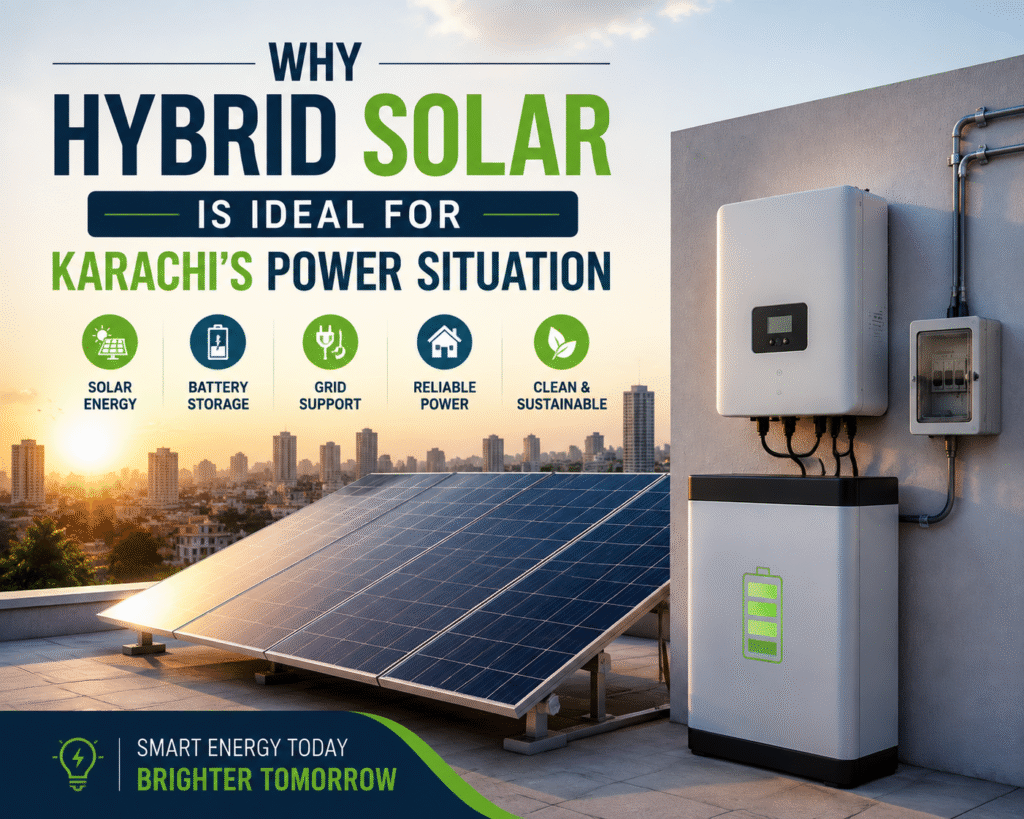
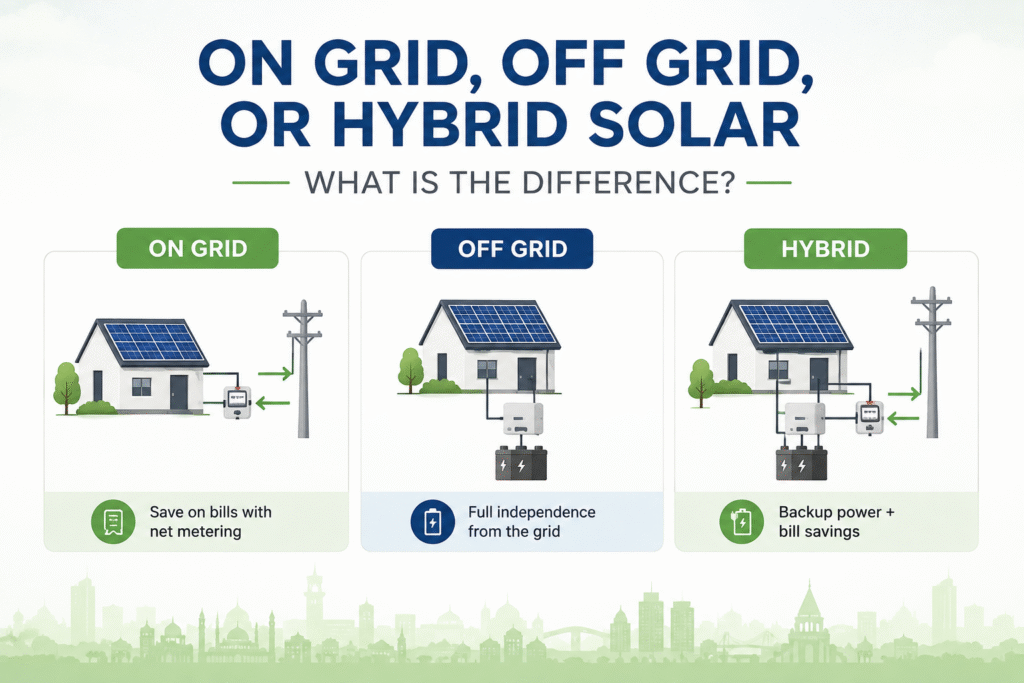
A hybrid system combines solar panels, battery storage, and a grid connection, so your home automatically draws from whichever source makes the most sense at any given moment. When the grid goes down, stored solar energy keeps your lights, fans, refrigerator, and essential appliances running no generators, no fuel costs, and no noise.
3. Increased Property Value
Homes equipped with solar panels are increasingly attractive to buyers and renters who want lower utility costs and energy resilience built into the property. A solar installation signals that the home is modern, efficient, and less exposed to future tariff hikes qualities that carry real weight in Pakistan’s current real estate market.
Beyond resale value, solar equipped homes are also easier to market to environmentally conscious buyers who prioritize sustainability alongside cost savings.
4. Energy Independence
Perhaps the most underrated benefit of going solar is the shift in mindset it creates. Instead of being at the mercy of utility pricing, fuel surcharges, and grid outages, homeowners who go solar gain a measure of self sustaining control over their power supply. You generate what you need, store the surplus, and reduce your exposure to factors completely outside your control like international fuel prices or utility policy changes.
This independence becomes even more valuable as electricity demand and tariffs in Pakistan continue to rise year over year.
5. Low Maintenance, Long Term Reliability
Solar panel systems are built to last, with most quality panels carrying warranties of 20 to 25 years and requiring very little day to day attention. Unlike generators, which need fuel, oil changes, and frequent servicing, solar systems have no moving parts in the panels themselves and operate quietly in the background.
That said, periodic professional maintenance and cleaning does matter dust, pollen, and general weathering can reduce panel efficiency over time, especially in Pakistan’s dusty urban environments. A simple cleaning and inspection routine a few times a year keeps your system performing at its peak and protects your investment for decades.
6. Reduced Carbon Footprint and Environmental Impact
Every unit of electricity generated from sunlight is a unit that doesn’t come from burning fossil fuels. As Pakistan continues to grapple with air quality issues and the broader impacts of climate change, homeowners who switch to solar are directly reducing their household’s contribution to greenhouse gas emissions.
This isn’t just a feel good statistic it’s a meaningful shift. A typical residential solar system can offset several tons of carbon emissions annually, equivalent to removing a car from the road or planting dozens of trees each year.
7. A Hedge Against Rising Energy Costs
Electricity tariffs in Pakistan have historically moved in one direction upward. Fuel price adjustments, currency fluctuations, and policy shifts all feed into unpredictable monthly bills. Solar panels essentially lock in a large portion of your energy cost at the point of installation. Once your system is paid off, your electricity is close to free for the remainder of its lifespan a stark contrast to a grid bill that keeps climbing regardless of your consumption habits.
This predictability is especially valuable for homeowners on fixed incomes or those trying to plan long term household budgets with more certainty.
8. Net Metering Turning Your Roof Into an Asset
Under Pakistan’s net metering framework, homeowners with grid tied solar systems can export excess electricity back to the utility and receive credit for it. This means that on days when your system produces more power than your household consumes common during long sunny afternoons that surplus doesn’t go to waste. It offsets future bills or, in some cases, generates income.
Navigating the paperwork, utility approvals, and technical requirements for net metering can be confusing, which is why understanding local solar regulations before installation is so important. A properly registered and compliant system ensures you don’t miss out on this benefit.
9. Flexible Solutions for Every Type of Home
Not every household has the same energy needs, and solar technology has evolved to match that diversity. Beyond standard rooftop panels, homeowners can now choose from:
- Solar thermal systems for heating water efficiently, cutting the cost of geysers and electric water heaters ideal for homes with heating and hot water needs.
- Battery based solar power storage for households that want backup power during outages without relying on a generator.
- Hybrid systems that blend solar generation, battery storage, and grid connectivity for maximum flexibility.
This range of options means solar isn’t a one size fits all decision it can be tailored to your roof space, budget, and household priorities.
10. A Strong Return on Investment
Solar panel systems typically pay for themselves within a few years through electricity savings alone, and from that point forward, the energy they produce is essentially free (minus minor maintenance costs). Compared to other home improvements, few upgrades offer this kind of measurable, ongoing financial return.
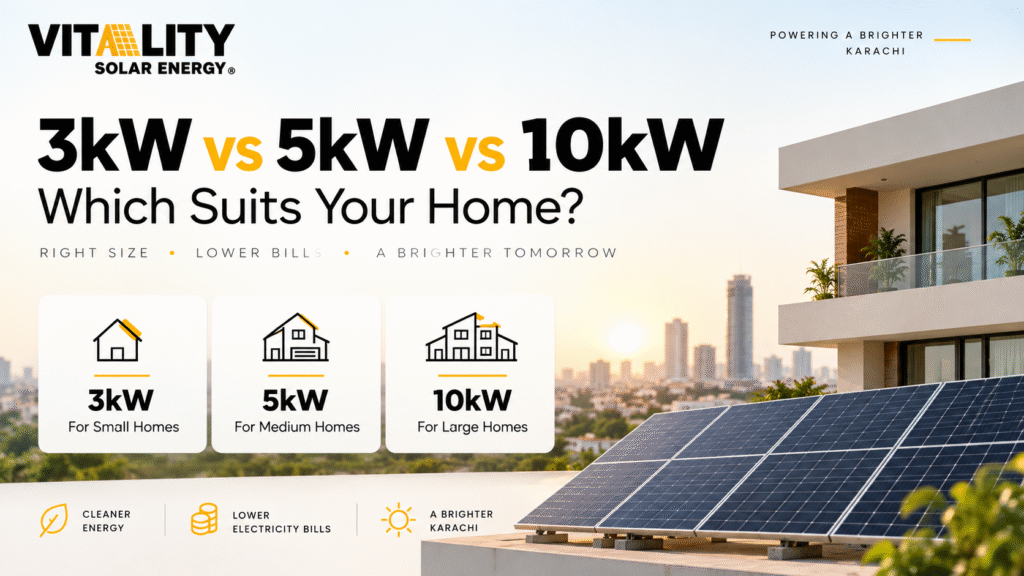
The payback period depends on system size, local sunlight exposure, household consumption, and current electricity rates which is why working through a proper solar system design process before installation matters. A well planned system, sized correctly for your actual usage, delivers faster payback and better long term value than a generic, one size fits all installation.
11. Reliable Power Conversion With the Right Equipment
A solar system is only as good as the components behind it, and the inverter plays a central role in how efficiently your panels convert sunlight into usable electricity for your home. Poorly matched or incorrectly installed inverters can quietly reduce your system’s output for years without you noticing.
Professional inverter installation ensures your system is calibrated correctly from day one, minimizing energy loss and maximizing the return on your solar investment.
12. Improved Indoor Comfort
Beyond electricity generation, solar technology also contributes to a more comfortable home. Solar thermal systems reduce the burden on electric water heaters, while solar powered fans, pumps, and cooling systems can run more consistently without straining your electricity bill. For households in hotter regions of Pakistan, this translates into more reliable comfort during peak summer months without the anxiety of a spiking utility bill.
13. Clear Guidance Reduces Risk and Confusion
One of the biggest hesitations homeowners have about going solar is uncertainty about system sizing, costs, permits, and whether their roof is even suitable. A professional energy audit removes much of that guesswork by assessing your actual consumption patterns and identifying the most cost effective system size before you commit to anything.
Pairing that with expert solar energy consulting means you get a data driven recommendation rather than a generic sales pitch helping you avoid oversized systems that waste money or undersized ones that fail to meet your household’s needs.
14. A Long Term Investment in Your Home’s Future
Going solar isn’t just about the next electricity bill it’s a long term investment in how your home functions for the next two to three decades. As Pakistan’s energy landscape continues to shift, homes with their own generation and storage capacity will be better positioned to handle tariff changes, supply disruptions, and rising demand on the national grid.
Getting Started
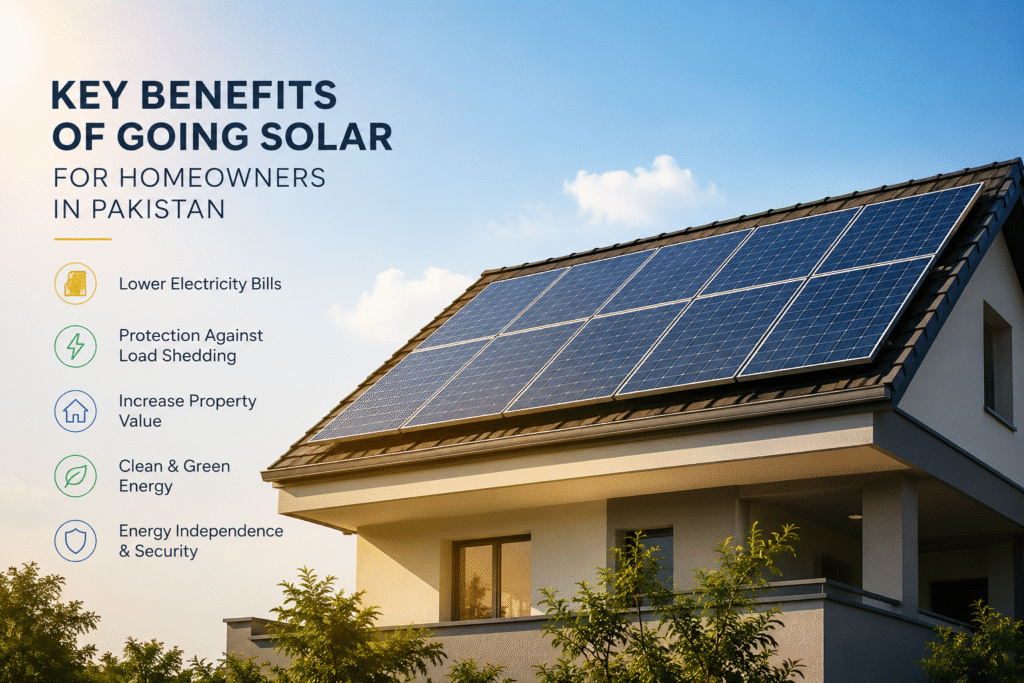
The benefits of solar are clear lower bills, backup power during outages, higher property value, reduced environmental impact, and long term energy independence. What matters most is getting the details right proper system sizing, quality components, correct installation, and full regulatory compliance.
At Vitality Solar Energy, our residential solar panel installation service covers every step of that process, from initial assessment to activation and ongoing support. If you’re ready to explore what solar could look like for your home, get in touch with our team for a no obligation consultation.