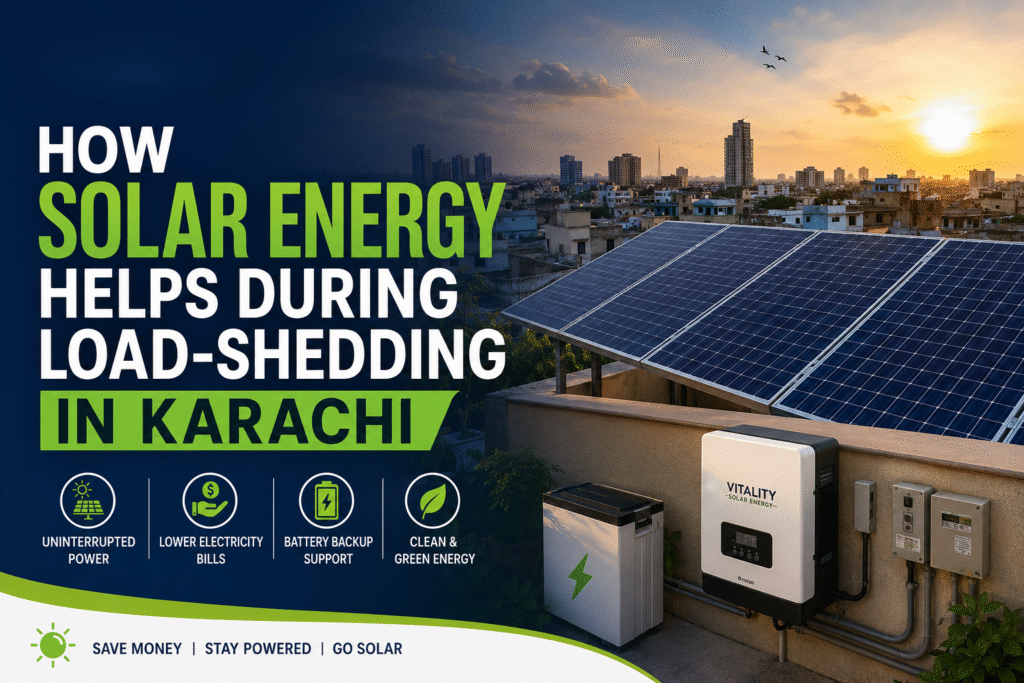
Electricity has become one of the biggest concerns for households and businesses in Karachi. From long hours of load shedding to unexpected power outages, residents often struggle to keep their homes, offices, and commercial operations running smoothly. Whether it is the scorching summer heat, increasing electricity bills, or interruptions in daily life, the need for a reliable power source has never been greater. This is where solar energy has emerged as one of the most practical and long term solutions. Instead of depending entirely on the national grid, thousands of Karachi residents are switching to solar systems to enjoy uninterrupted electricity, lower monthly bills, and greater energy independence. The growing demand for rooftop solar installations across Pakistan reflects this shift toward cleaner and more reliable energy solutions. If you’re wondering how solar energy can help you during load shedding in Karachi, this comprehensive guide explains everything you need to know.
Understanding the Load Shedding Problem in Karachi
Karachi is Pakistan’s largest city and economic hub. Millions of people rely on electricity every day for:
- Home appliances
- Air conditioning
- Water pumps
- Internet connectivity
- Business operations
- Educational activities
- Healthcare equipment
Unfortunately, scheduled and unscheduled power outages continue to affect many areas of the city. Even where supply has improved, grid interruptions and maintenance shutdowns can still disrupt everyday life. Combined with extremely high summer temperatures, electricity interruptions become more than just an inconvenience they directly affect comfort, productivity, and safety.
What is Solar Energy?
Solar energy is electricity generated from sunlight using photovoltaic (PV) solar panels.
A typical residential solar system includes:
- Solar panels
- Solar inverter
- Mounting structure
- Safety protection equipment
- Optional battery storage
- Monitoring system
During daylight hours, solar panels convert sunlight into electricity that powers your home or business.
Depending on the type of system installed, the electricity can be:
- Used immediately
- Stored in batteries
- Exported to the grid through net metering (where applicable)
Why Solar Energy is Becoming Popular in Karachi
Karachi enjoys abundant sunshine throughout the year, making it one of the best cities in Pakistan for solar power generation.
Some major reasons behind the growing popularity include:
- Rising electricity prices
- Frequent power outages
- High cooling requirements
- Lower solar equipment costs
- Long lifespan of solar panels
- Growing awareness of renewable energy
Thousands of homes and businesses across Karachi have already adopted solar systems to reduce dependence on conventional electricity.
How Solar Energy Helps During Load Shedding
1. Provides Electricity During Power Outages
The biggest advantage of solar energy is uninterrupted electricity. If your solar system includes battery backup or a hybrid inverter, your essential appliances continue running even when the grid goes down.
These appliances may include:
- Fans
- LED lights
- Refrigerators
- Wi Fi routers
- Water pumps
- Laptops
- Mobile charging
- Security systems
Instead of sitting in darkness, your home remains functional throughout the outage.
2. Keeps Your Home Comfortable During Summer
Karachi experiences extremely hot summers where temperatures often exceed 40°C. Load shedding during peak afternoon hours can make homes uncomfortable. Solar systems generate maximum electricity precisely when sunlight is strongest.
This means you can continue using:
- Ceiling fans
- Inverter air conditioners
- Coolers
- Ventilation systems
without relying entirely on expensive grid electricity.
3. Supports Work From Home
Many professionals now work remotely.
Power outages interrupt:
- Video meetings
- Internet connectivity
- Laptop charging
- Productivity
Solar energy ensures your home office remains operational throughout the day.
A stable electricity supply means:
- No missed meetings
- Better productivity
- Reliable internet
- Continuous charging
4. Keeps Businesses Running
Load shedding can be extremely costly for businesses.
Industries affected include:
- Retail shops
- Restaurants
- Offices
- Clinics
- Schools
- Warehouses
- Salons
- Manufacturing units
Every hour without electricity may result in:
- Lost customers
- Reduced productivity
- Spoiled inventory
- Employee downtime
Solar systems provide dependable daytime electricity, helping businesses continue operating while reducing operating costs.
5. Reduces Dependence on Generators
Before solar energy became popular, diesel and petrol generators were the primary backup solution.
However, generators have many disadvantages:
- High fuel costs
- Loud noise
- Regular maintenance
- Air pollution
- Limited operating hours
Solar systems offer a cleaner and quieter alternative.
Unlike generators, sunlight is free.
6. Saves Money Every Month
Electricity bills continue to increase every year. Solar systems significantly reduce monthly electricity expenses because your home produces much of its own electricity. The savings accumulate over many years, making solar a smart long term investment. Many homeowners recover their installation costs over several years through reduced electricity bills.
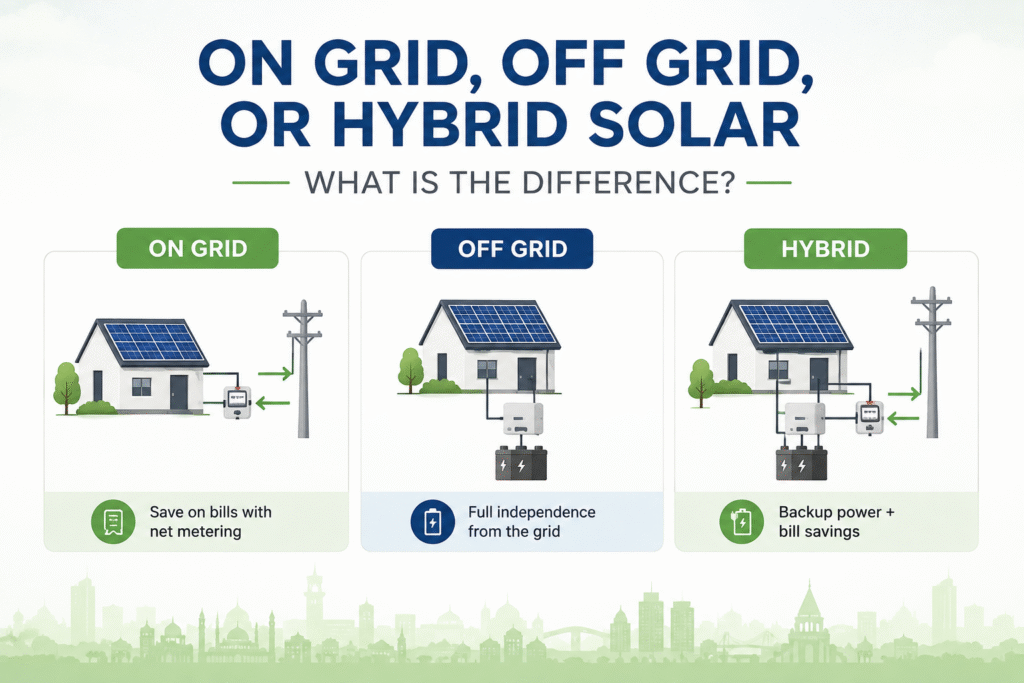
Different Types of Solar Systems
Understanding the available options helps you choose the right solution.
On Grid Solar System
This system is connected directly to the electricity grid.
Benefits include:
- Lower electricity bills
- Net metering eligibility (where approved)
- Lower installation cost
Limitation:
During grid outages, standard on grid systems shut down for safety unless paired with backup capabilities.
Off Grid Solar System
An off grid system operates independently.
It includes:
- Solar panels
- Battery bank
- Inverter
Ideal for:
- Remote locations
- Areas with unreliable electricity
- Complete energy independence
Hybrid Solar System
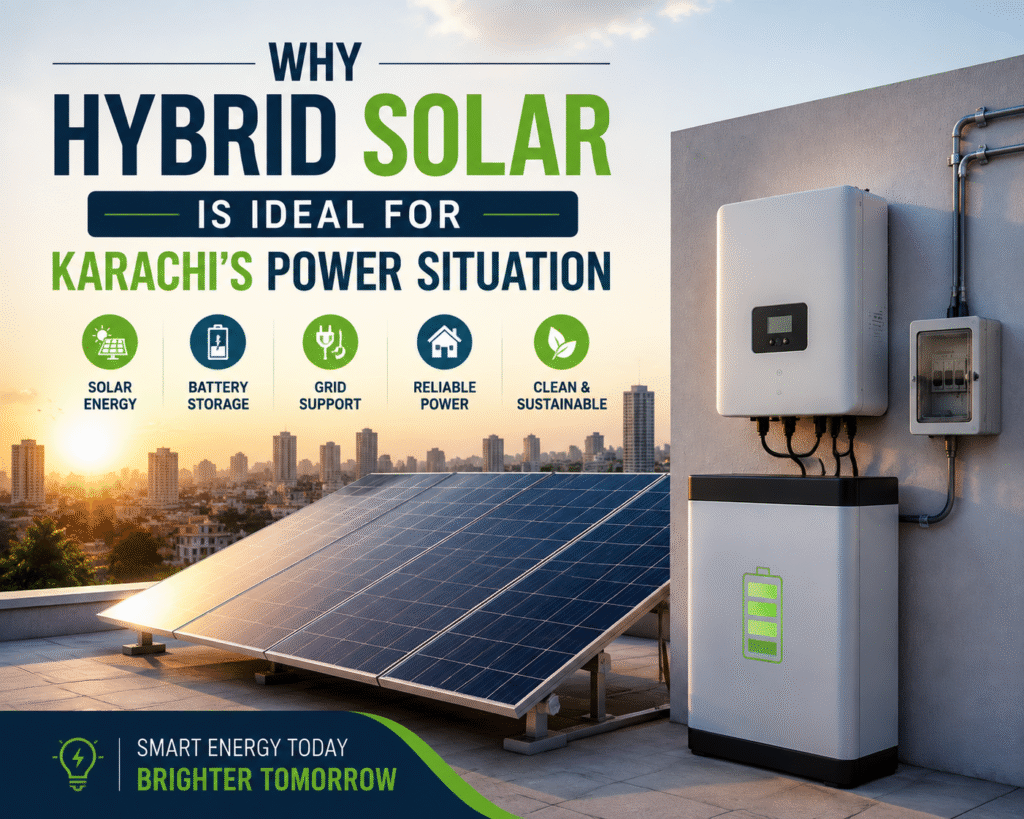
Hybrid systems combine the advantages of both.
Features include:
- Solar panels
- Battery storage
- Grid connection
Benefits:
- Electricity during load shedding
- Reduced electricity bills
- Battery backup
- Greater flexibility
For many homes and businesses in Karachi, hybrid systems provide the best balance between reliability and cost.
Which Appliances Can Run During Load Shedding?
The answer depends on your system size. A properly designed solar setup can power:
Essential Appliances
- LED lights
- Ceiling fans
- Wi Fi router
- Television
- Refrigerator
- Mobile charging
- Laptop
Medium Loads
- Washing machine
- Water pump
- Microwave
- Desktop computer
Heavy Loads
Larger systems may also support:
- Inverter air conditioners
- Deep freezers
- Commercial equipment
- Office machinery
The exact capacity depends on your energy needs and system design.
Why Battery Backup Makes a Big Difference
Solar panels only produce electricity when sunlight is available. During nighttime or extended outages, batteries provide stored energy.
Battery backup offers several benefits:
- Night time electricity
- Continuous operation during outages
- Better energy management
- Greater independence from the grid
Hybrid systems with batteries are particularly effective for areas that experience frequent load shedding.
Environmental Benefits of Solar Energy
Besides helping during load shedding, solar energy contributes to a cleaner environment.
Benefits include:
Reduced Carbon Emissions
Solar electricity produces no direct greenhouse gas emissions during operation.
Cleaner Air
Less reliance on diesel generators means lower local air pollution.
Renewable Energy Source
Unlike fossil fuels, sunlight is naturally replenished and widely available.
Lower Noise Pollution
Solar systems operate quietly, unlike fuel powered generators.
Is Karachi Suitable for Solar Energy?
Absolutely.
Karachi receives abundant sunshine for most of the year, making rooftop solar systems highly productive. High solar irradiance allows homeowners and businesses to generate substantial electricity throughout the year, especially during the long summer months.
Who Should Consider Installing Solar?
Solar energy is suitable for:
Homeowners
Ideal for reducing bills while maintaining comfort during outages.
Apartment Owners
Subject to rooftop access and installation feasibility.
Commercial Buildings
Reduce operational costs while maintaining uninterrupted business activities.
Factories
Lower production costs and reduce dependence on expensive backup generators.
Schools
Ensure classrooms remain operational despite power interruptions.
Hospitals and Clinics
Support critical equipment and improve service reliability.
Common Misconceptions About Solar Energy
“Solar Doesn’t Work During Load Shedding”
This is only partly true. A standard grid tied system shuts down during outages, but a hybrid or battery backed solar system is specifically designed to continue powering essential loads during load shedding.
“Solar is Too Expensive”
While the upfront investment can be significant, falling equipment prices and long term electricity savings make solar increasingly cost effective over its lifespan.
“Solar Panels Need Constant Maintenance”
Not true. Solar panels generally require only periodic cleaning to remove dust and debris. Professional inspections every few years help maintain optimal performance.
“Solar Only Works in Summer”
Solar panels generate electricity throughout the year. Although production varies with weather conditions, they continue producing energy during winter and cloudy days.
Tips for Maximizing Solar Performance During Load Shedding
To get the most from your solar investment:
- Choose high quality solar panels.
- Select an inverter suited to your energy needs.
- Consider battery storage if uninterrupted power is important.
- Keep panels clean and free from dust.
- Schedule regular system inspections.
- Work with experienced and reputable installers.
Choosing the Right Solar Partner
Installing a solar system is a long term investment, so selecting the right provider matters.
Look for a company that offers:
- Professional site assessment
- Customized system design
- Quality components
- Certified installation
- Transparent pricing
- After sales support
- Warranty coverage
Companies like Vitality Solar Energy provide residential, commercial, and industrial solar solutions tailored for Karachi’s climate, helping customers reduce electricity costs while ensuring dependable performance during power interruptions.
The Future of Solar Energy in Pakistan
Pakistan is witnessing rapid growth in solar adoption. Rising electricity costs, improving technology, and increased awareness are encouraging more households and businesses to invest in renewable energy. Industry observers estimate that distributed solar capacity has expanded dramatically in recent years, making rooftop solar a key part of the country’s evolving energy landscape.
For cities like Karachi, where uninterrupted electricity is essential, solar energy is expected to play an even greater role in ensuring reliable and sustainable power.
Frequently Asked Questions
Can solar panels work during load shedding?
Yes, if your system includes a hybrid inverter and battery backup. Standard on grid systems typically stop supplying power during grid outages for safety reasons.
How much can I save with solar energy?
Savings vary depending on your electricity consumption, system size, and usage patterns, but many users experience a significant reduction in monthly electricity bills.
Is solar suitable for apartments?
Yes, provided there is sufficient rooftop access and permission for installation.
How long do solar panels last?
Quality solar panels generally have a lifespan of 25 years or more, with performance warranties commonly covering this period.
Do solar panels require a lot of maintenance?
No. Routine cleaning and occasional inspections are usually sufficient to keep the system operating efficiently.
Conclusion
Load shedding remains one of the biggest challenges for residents and businesses in Karachi, disrupting daily routines, reducing productivity, and increasing dependence on costly backup power sources. Solar energy offers a practical and sustainable solution by providing reliable electricity during daylight hours, lowering electricity bills, and reducing reliance on generators. When paired with battery storage, a hybrid solar system can keep essential appliances running even during extended power outages.
With Karachi’s abundant sunshine and the growing availability of high quality solar solutions, there has never been a better time to invest in renewable energy. Whether you own a home, manage a business, or operate an industrial facility, switching to solar can provide long term financial savings, greater energy independence, and peace of mind.