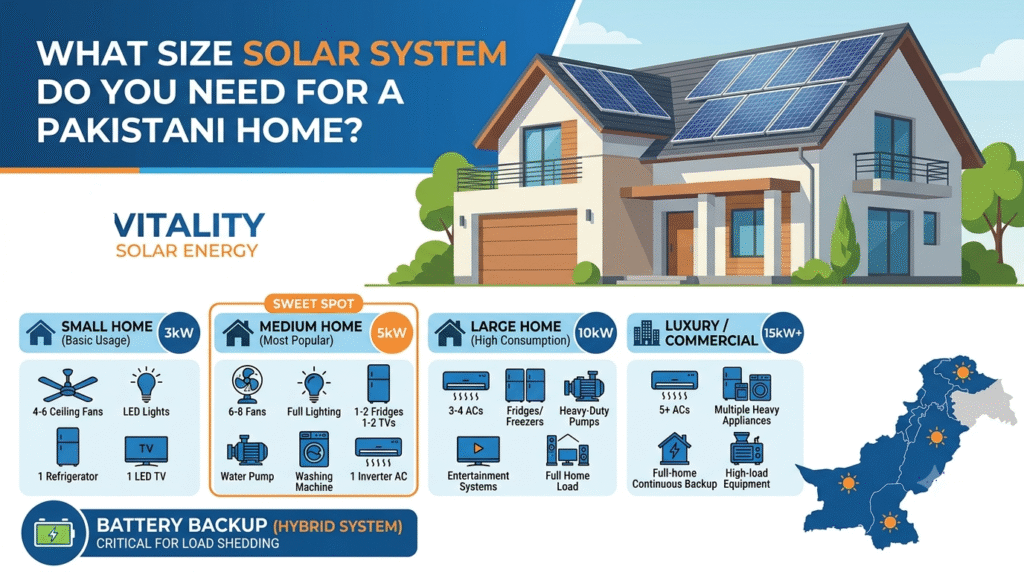
Electricity demand in Pakistan continues to rise every year, while supply challenges and increasing tariffs have made grid electricity expensive and unreliable for many households. In cities like Karachi, Lahore, Islamabad, and other urban centers, frequent power outages and load shedding have become part of daily life. As a result, more homeowners are shifting toward solar energy as a long term solution for energy independence, cost savings, and uninterrupted electricity supply.
One of the most common questions homeowners ask before switching is:
“What size solar system do I actually need for my home?”
Choosing the right system size is one of the most important decisions in your solar journey. A system that is too small will not meet your energy needs, while an oversized system may increase upfront costs unnecessarily.
This guide explains everything in detail how solar system sizing works, how much electricity different home sizes require, what appliances you can run on different kW systems, and how solar energy helps during load shedding in Pakistan, especially in residential settings.
Understanding Solar System Size kW Explained Simply
Solar system size is measured in kilowatts (kW). This represents how much power your solar system can generate under ideal sunlight conditions.
- 1 kW system = basic energy production capacity
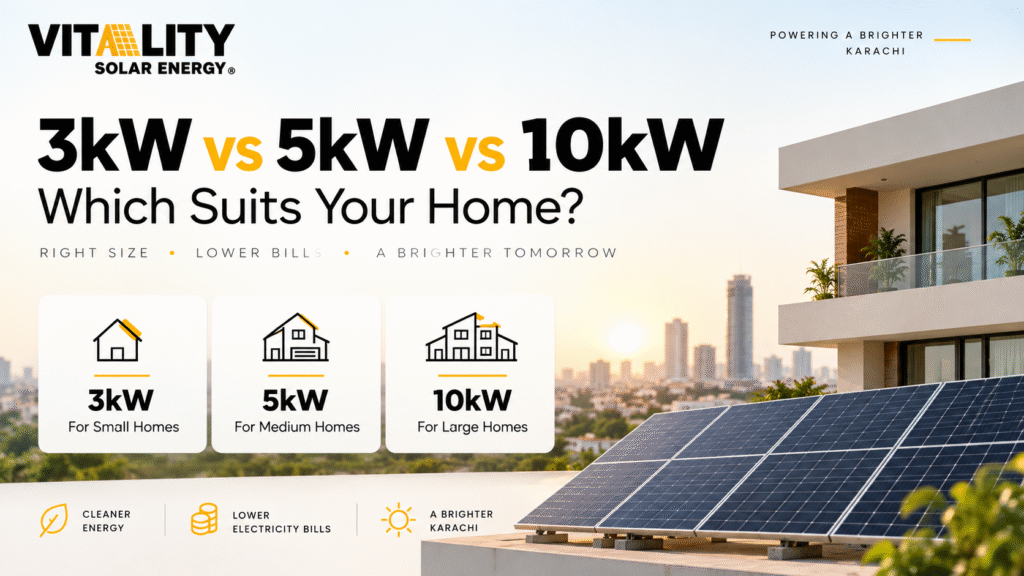
- 3 kW system = small home usage
- 5 kW system = medium home usage
- 10 kW system = large home usage
- 15 kW+ system = commercial or high consumption homes
However, actual energy production depends on sunlight hours, location, system efficiency, and installation quality. In Pakistan, especially cities like Karachi, average sunlight availability makes solar systems highly effective throughout the year.
Why Solar System Sizing Matters for Pakistani Homes
Choosing the right solar system size ensures:
- Consistent electricity during load shedding
- Lower electricity bills
- Proper appliance coverage
- Efficient return on investment
- Reduced dependence on WAPDA/grid electricity
Many homeowners make the mistake of choosing systems based only on budget rather than actual consumption, which leads to performance issues later. A properly sized system ensures that your home runs smoothly even during peak summer load shedding hours.
Average Electricity Consumption in Pakistani Homes
Before choosing a system size, you must understand energy usage patterns.
Here is a general breakdown:
Small Home Basic Usage
- Monthly bill: 100 to 300 units
- Fans, lights, small refrigerator, TV
Medium Home Standard Family
- Monthly bill: 300 to 600 units
- Multiple fans, fridge, LED TVs, washing machine, water pump, AC (limited use)
Large Home High Consumption
- Monthly bill: 600 to 1200+ units
- Multiple ACs, deep freezer, heavy appliances, pumps, entertainment systems
Solar System Size Guide for Pakistani Homes
1 kW Solar System
A 1 kW system is suitable for very minimal electricity needs.
What it can run:
- 2 to 3 LED lights
- 1 ceiling fan
- Small Wi Fi router
- Mobile charging
Best for:
- Small rooms
- Backup for minimal load
- Rural or low usage setups
Not suitable for full home usage.
3 kW Solar System Small Home Solution
A 3 kW system is one of the most popular entry level residential systems in Pakistan.
What it can run:
- 4 to 6 ceiling fans
- LED lights for entire house
- 1 refrigerator
- 1 LED TV
- Wi Fi router
- Occasional small appliances
Ideal home size:
- 2 to 3 rooms
- Small apartment or house
Load shedding benefit:
- Keeps essential appliances running during outages
This system significantly reduces electricity bills but may struggle with air conditioning loads.
5 kW Solar System Most Popular Residential Choice
A 5 kW system is considered the sweet spot for most Pakistani families.
What it can run:
- 6 to 8 ceiling fans
- LED lighting for entire house
- 1 to 2 refrigerators
- 1 to 2 LED TVs
- Water pump small usage
- Washing machine limited usage
- 1 inverter AC occasional use
- Wi Fi and office setup
Ideal home size:
- 3 to 5 rooms
- Medium sized family home
Load shedding performance:
- Can support essential loads easily
- With batteries, can handle nighttime backup
This system provides a strong balance between affordability and performance.
7 kW Solar System Balanced High Performance Home System
A 7 kW system is ideal for families with higher electricity usage.
What it can run:
- Multiple fans and lights
- 2 refrigerators or freezer
- 2 to 3 LED TVs
- 1 to 2 inverter ACs
- Water pump
- Washing machine
- Home office equipment
Ideal home size:
- Large family homes (5 to 7 rooms)
Load shedding advantage:
- Can support most appliances during outages
- Excellent for hot Karachi summers with AC backup
10 kW Solar System Large Homes / High Consumption
A 10 kW system is designed for high energy households.
What it can run:
- 3 to 4 air conditioners
- Multiple refrigerators/freezers
- Entire lighting system
- Heavy duty water pumps
- Washing machines and dryers
- Entertainment systems
- Office or commercial style home usage
Ideal home size:
- Large houses or villas
- Joint families
Load shedding benefit:
- Near complete independence during outages with batteries
This system significantly reduces reliance on the grid.
15 kW+ Solar System Luxury / Commercial Level Homes
A 15 kW or larger system is used for:
- Large villas
- Farmhouses
- High end residential properties
- Mixed residential commercial use
What it can run:
- 5+ air conditioners
- Multiple heavy appliances
- Continuous full home backup
- High load equipment
Load shedding advantage:
- Almost full independence from grid electricity
- Can run entire house without interruption
How Solar Energy Helps During Load Shedding in Pakistan
Load shedding is one of the biggest reasons homeowners shift to solar energy. Solar systems help in multiple ways:
1. Continuous Electricity Supply
With solar + battery backup, your home continues functioning during outages.
You can still run:
- Fans
- Lights
- Wi Fi
- Refrigerators
- TVs
- Security systems
2. Comfort During Extreme Heat
In cities like Karachi, summer temperatures often become unbearable during load shedding.
Solar systems ensure:
- Fans keep running
- ACs in larger systems continue working
- Comfortable indoor environment
3. Reduced Dependence on Generators
Generators are expensive and noisy.
Solar eliminates:
- Fuel costs
- Maintenance issues
- Noise pollution
- Startup delays
4. Stable Routine for Families
Load shedding disrupts:
- Children’s study routines
- Remote work
- Business operations
- Sleep cycles
Solar energy restores stability by providing consistent power.
5. Better Business Productivity at Home
Many people now run businesses from home.
Solar ensures:
- Internet continuity
- Laptop and computer uptime
- Lighting during working hours
What Appliances Can You Run on Solar?
Small Systems (3 kW)
- Lights
- Fans
- TV
- Fridge
- Wi Fi
Medium Systems (5 kW)
- All of the above +
- Washing machine
- Water pump limited
- 1 AC intermittent
Large Systems (7 to 10 kW)
- Multiple ACs
- Deep freezers
- Heavy appliances
- Full home backup
Premium Systems (15 kW+)
- Entire home load
- Continuous AC usage
- Commercial level appliances
On Grid vs Hybrid vs Off Grid Systems
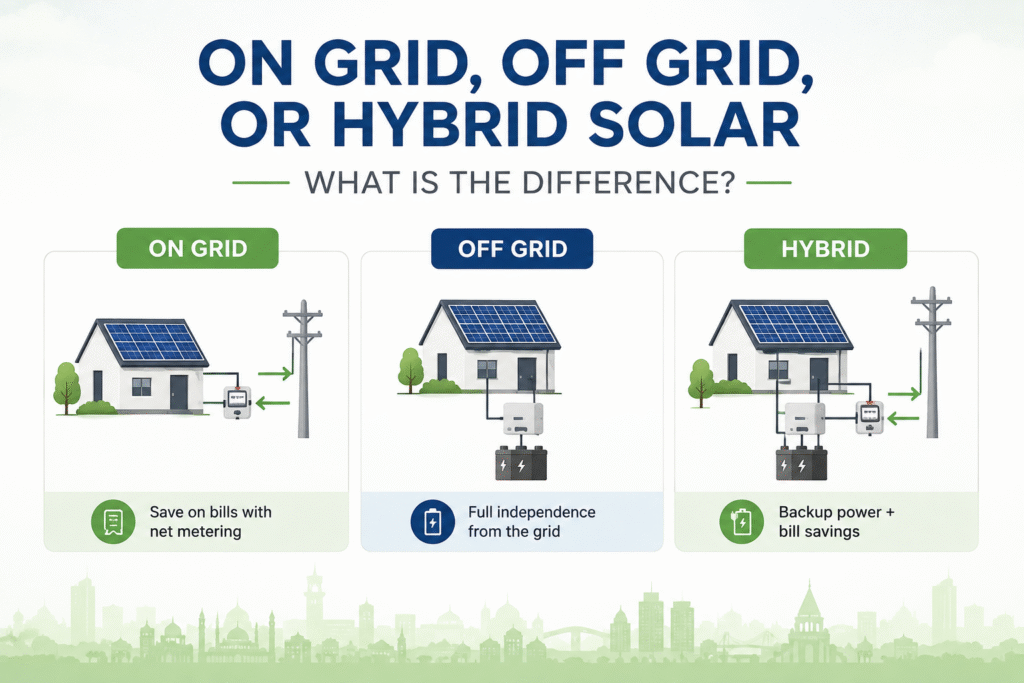
On Grid System
- Connected to WAPDA
- No backup during load shedding
- Best for bill savings
Hybrid System
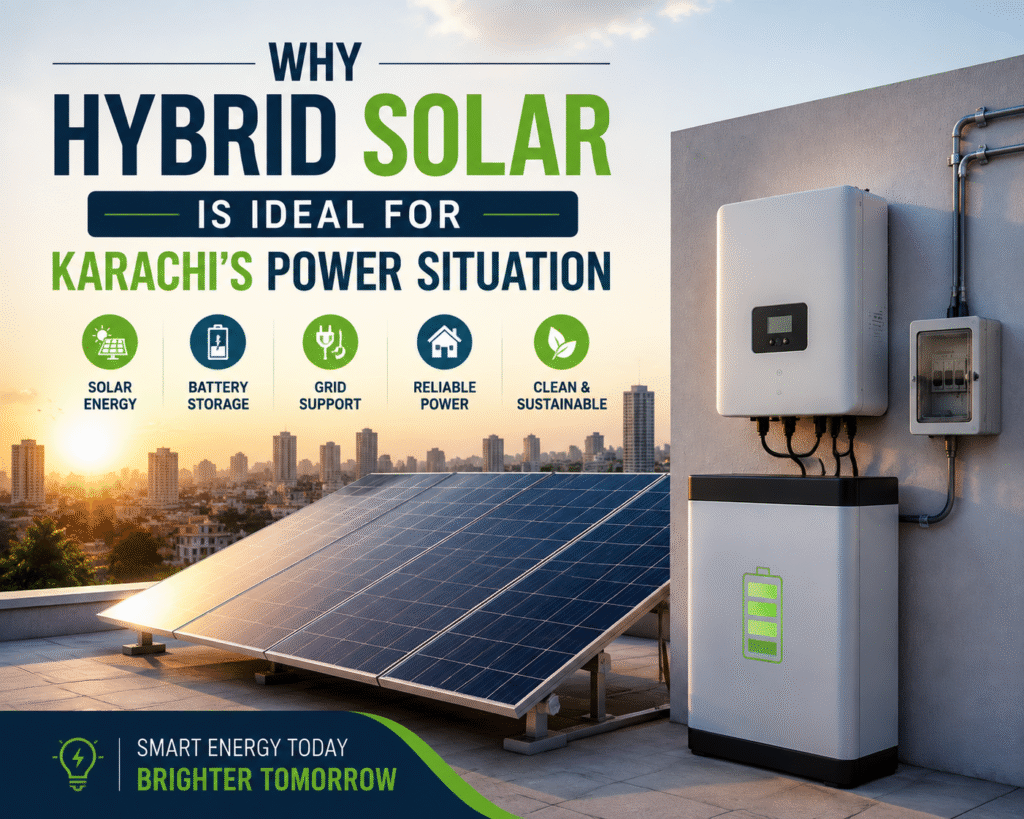
- Solar + batteries + grid
- Works during load shedding
- Most recommended for Pakistani homes
Off Grid System
- No grid connection
- Fully independent
- Higher battery requirement
Battery Backup and Its Importance
Batteries determine how long your home runs during load shedding.
Battery benefits:
- Night time power supply
- Backup during long outages
- Appliance stability
Without batteries:
- No backup during load shedding
With batteries:
- Full independence for essential loads
Factors That Affect Solar System Size
When choosing system size, consider:
1. Electricity Bills
Higher bills = larger system required
2. Number of Appliances
More appliances = higher kW system
3. Air Conditioning Usage
AC significantly increases system size requirement
4. Roof Space
Limited roof = system optimization needed
5. Budget
Investment affects system type and size
Cost vs Benefit of Solar Systems in Pakistan
Although solar requires initial investment, it offers:
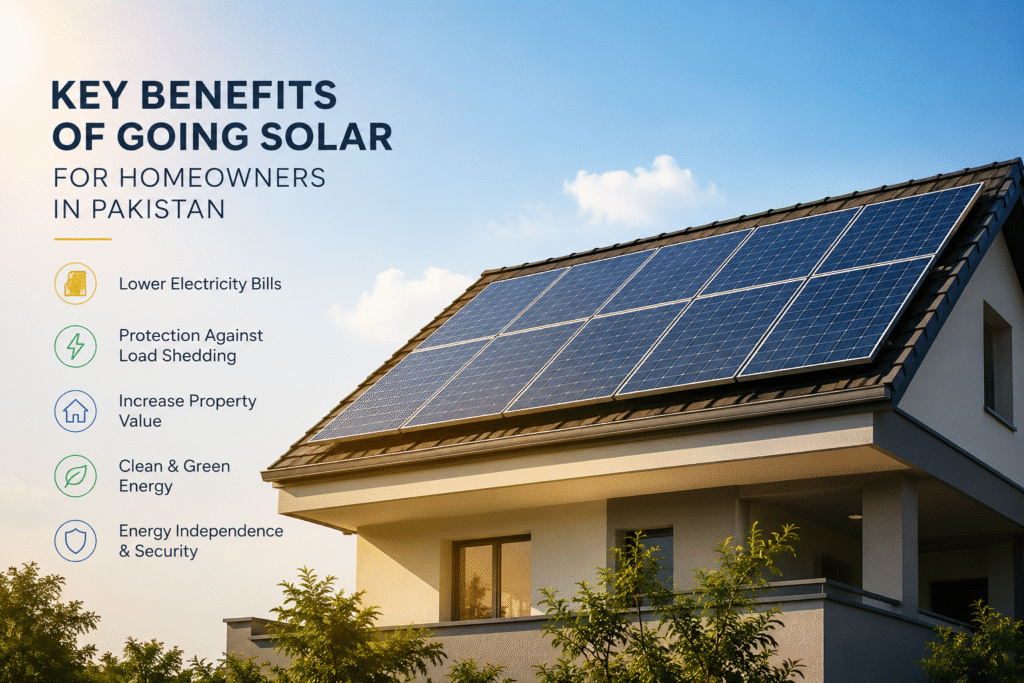
- Long term savings
- Reduced electricity bills
- Energy independence
- Protection against tariff hikes
Most systems pay for themselves over time through savings.
How Vitality Solar Energy Helps You Choose the Right System
At Vitality Solar Energy, we simplify your switch to solar by analyzing your home’s electricity usage, roof space, and load requirements to recommend the perfect system size. Whether you need a small backup setup or a full 10kW hybrid system for complete home coverage, we provide customized solutions designed for maximum efficiency and savings. From expert installation to reliable after-sales support, we ensure your home gets uninterrupted power during load shedding, lower electricity bills, and long-term energy independence.
Final Recommendation for Pakistani Homes
Here is a simple guide:
- Small home → 3 kW system
- Medium home → 5 kW system
- Large home → 7 to 10 kW system
- Luxury/high usage → 10 to 15 kW+ system
For most families in Pakistan, a 5 kW to 7 kW hybrid system is the most practical and balanced choice.
Conclusion
Selecting the right solar system size is essential for achieving reliable electricity, especially in Pakistan where load shedding and rising energy costs are ongoing challenges. From small households to large families, solar energy offers a scalable solution that adapts to different needs. Whether your goal is reducing electricity bills, ensuring backup power during outages, or achieving full energy independence, the right system size plays a key role in success.
With proper planning and professional installation, solar energy can transform your home into a more efficient, comfortable, and self sustaining space. For Pakistani homeowners, solar is no longer just an alternative it is becoming a necessity for a stable and cost effective energy future.