Electricity has become one of the most essential needs of modern life. From powering household appliances and cooling systems to supporting remote work, education, security systems, and daily activities, a stable electricity supply is necessary for every home and business. However, many households in Pakistan continue to experience challenges such as load shedding, increasing electricity prices, and unreliable grid power. These challenges have encouraged homeowners to look for smarter and more reliable energy solutions. Solar energy has become one of the most effective alternatives, allowing people to generate clean electricity directly from sunlight. Among the different types of solar systems available today, hybrid solar systems have gained significant popularity because they combine the benefits of solar panels, battery storage, and grid electricity into one complete solution.
A hybrid solar system provides homeowners with greater energy independence by allowing them to use solar power during the day, store extra energy for later use, and automatically switch to backup power during outages. For Pakistani homes, especially in cities like Karachi where load shedding and high electricity costs are common concerns, hybrid solar systems offer an ideal balance between savings, reliability, and uninterrupted power supply. In this guide, we will explain how a hybrid solar system works, its components, benefits, installation process, and why it is becoming one of the best choices for residential solar solutions.
What Is a Hybrid Solar System?
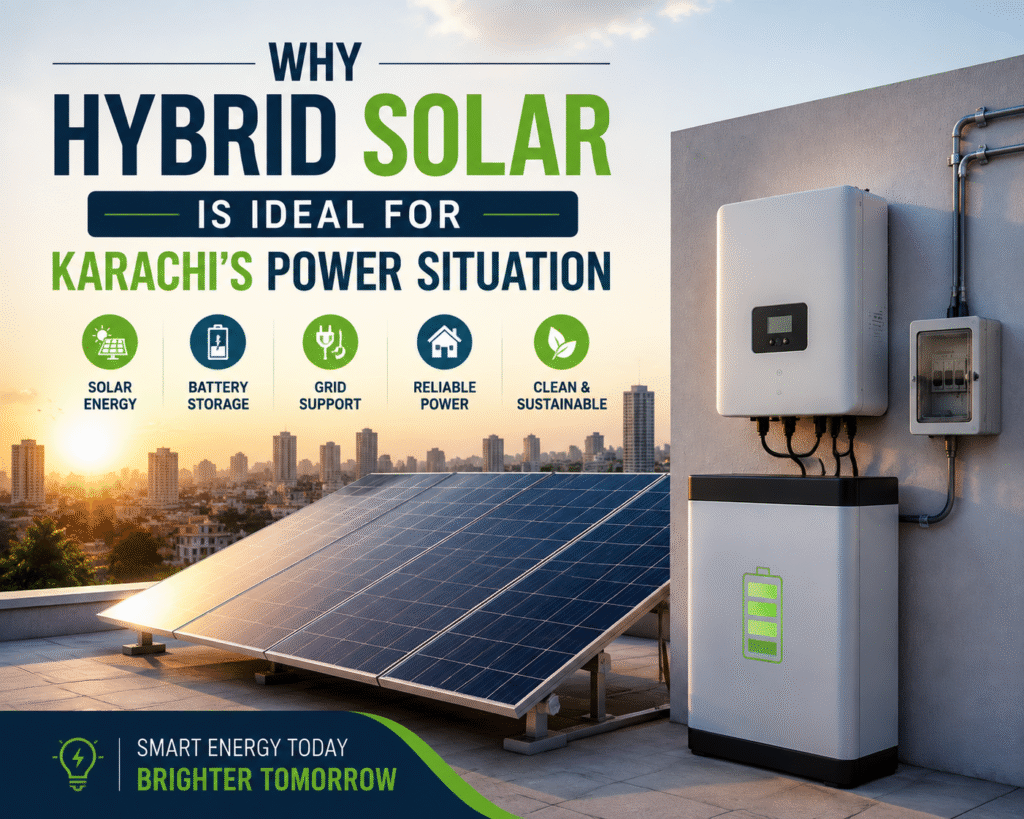
A hybrid solar system is an advanced solar energy setup that combines:
- Solar panels
- Hybrid inverter
- Battery storage
- Utility grid connection
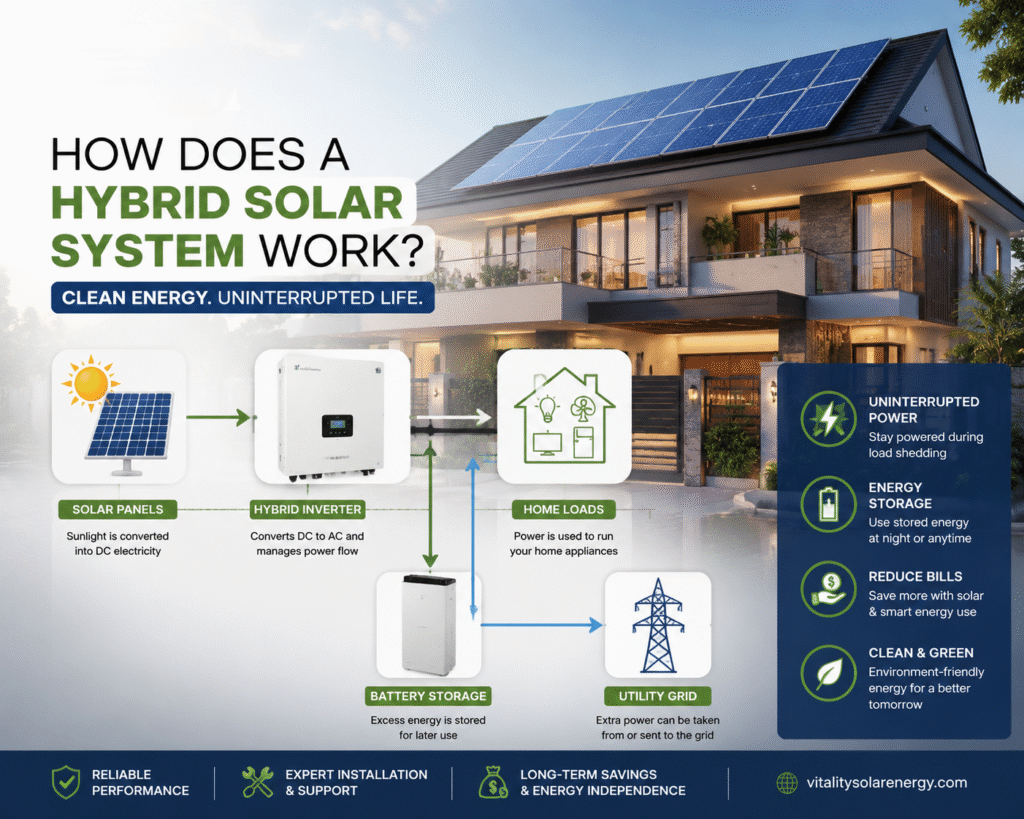
Unlike traditional solar systems that only generate electricity during sunlight hours, hybrid systems can store excess solar energy and use it when needed. During the day, solar panels generate electricity from sunlight. The energy is first used to power household appliances. If the solar panels produce more electricity than the home requires, the extra energy is stored in batteries. When sunlight is unavailable, such as at night or during load shedding, the stored battery energy supplies electricity to the home. If both solar and battery power are insufficient, the system can automatically use electricity from the grid. This intelligent combination makes hybrid solar systems one of the most reliable energy solutions for modern homes.
How Does a Hybrid Solar System Work?
A hybrid solar system works through a simple but efficient process.
Step 1: Solar Panels Capture Sunlight
The process begins when solar panels installed on your rooftop absorb sunlight. Solar panels contain photovoltaic cells that convert sunlight into direct current (DC) electricity.
The amount of electricity generated depends on:
- Number of solar panels
- Panel efficiency
- Sunlight availability
- Installation angle
- Weather conditions
In Pakistan, where sunlight is available for most of the year, solar panels can generate significant electricity for residential use.
Step 2: The Inverter Converts Electricity
The electricity generated by solar panels is DC electricity, but household appliances require alternating current (AC) electricity. The hybrid inverter converts DC electricity into usable AC electricity.
The inverter is considered the brain of the solar system because it manages:
- Solar energy production
- Battery charging
- Electricity usage
- Grid connection
- Backup power switching
A high quality hybrid inverter ensures better efficiency and system performance.
Step 3: Solar Power Runs Your Home
During daylight hours, solar energy is used directly to power household appliances.
Common appliances powered by solar energy include:
- Lights
- Fans
- Refrigerators
- Televisions
- Washing machines
- Computers
- Water pumps
- Air conditioners (depending on system size)
Using solar energy during the day reduces dependence on grid electricity and lowers monthly electricity bills.
Step 4: Extra Energy Is Stored in Batteries
If your solar panels generate more electricity than your home currently needs, the extra energy is stored in batteries.
For example:
Your solar panels generate 8 kWh of electricity.
Your home uses 5 kWh.
The remaining 3 kWh can be stored for later use.
Battery storage allows homeowners to use solar energy even when:
- The sun is not available
- Electricity prices are high
- Load shedding occurs
Step 5: Battery Provides Backup During Load Shedding
One of the biggest advantages of a hybrid solar system is backup power during outages. When grid electricity goes off, the hybrid inverter automatically switches the home to battery power. This happens within seconds, allowing important appliances to continue working.
Depending on battery capacity, homeowners can run:
- Fans
- Lights
- Internet routers
- Refrigerators
- Security cameras
- TVs
- Office equipment
- AC units
This makes hybrid solar systems especially valuable in areas with frequent power interruptions.
Main Components of a Hybrid Solar System
A hybrid solar system consists of several important components working together.
1. Solar Panels
Solar panels are responsible for converting sunlight into electricity.
Modern solar panels provide:
- High efficiency
- Long lifespan
- Better performance
- Low maintenance requirements
The number of panels depends on your energy requirements and available roof space.
2. Hybrid Solar Inverter
The hybrid inverter is the central component of the system.
It controls:
- Solar electricity conversion
- Battery charging
- Power distribution
- Grid interaction
- Backup switching
Unlike standard inverters, hybrid inverters can manage multiple energy sources at the same time.
3. Solar Batteries
Batteries store extra solar energy for later use.
Modern lithium batteries are commonly preferred because they offer:
- Longer lifespan
- Faster charging
- Higher efficiency
- Better performance
Battery size depends on:
- Required backup duration
- Appliance load
- Usage pattern
4. Mounting Structure
Mounting structures secure solar panels on rooftops.
A proper mounting system ensures:
- Panel stability
- Correct angle
- Long term durability
- Protection against weather conditions
5. Protection Equipment
Safety components include:
- Circuit breakers
- Surge protection devices
- Safety switches
- Electrical protection systems
These protect both the solar system and household appliances.
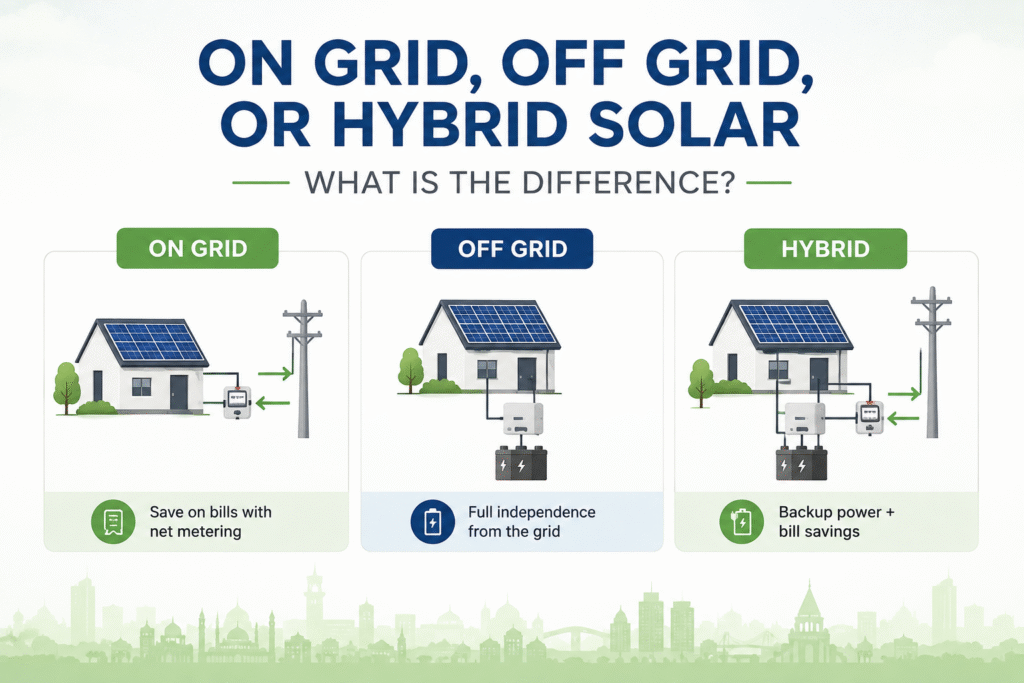
Difference Between On Grid and Hybrid Solar Systems
Many homeowners are confused between on grid and hybrid solar systems.
On Grid Solar System
An on grid system connects directly with the electricity grid.
Advantages:
- Lower installation cost
- Reduced electricity bills
- Net metering option
Limitations:
- Usually stops working during power outages
- No battery backup
Hybrid Solar System
A hybrid system combines:
- Solar panels
- Battery storage
- Grid electricity
Advantages:
- Works during load shedding
- Stores extra energy
- Provides backup power
- Greater energy independence
For Pakistani homes facing regular outages, hybrid systems are often the more practical choice.
Why Hybrid Solar Systems Are Ideal for Pakistani Homes
Pakistan receives excellent sunlight throughout most of the year, making solar energy highly effective.
Hybrid solar systems solve several common problems:
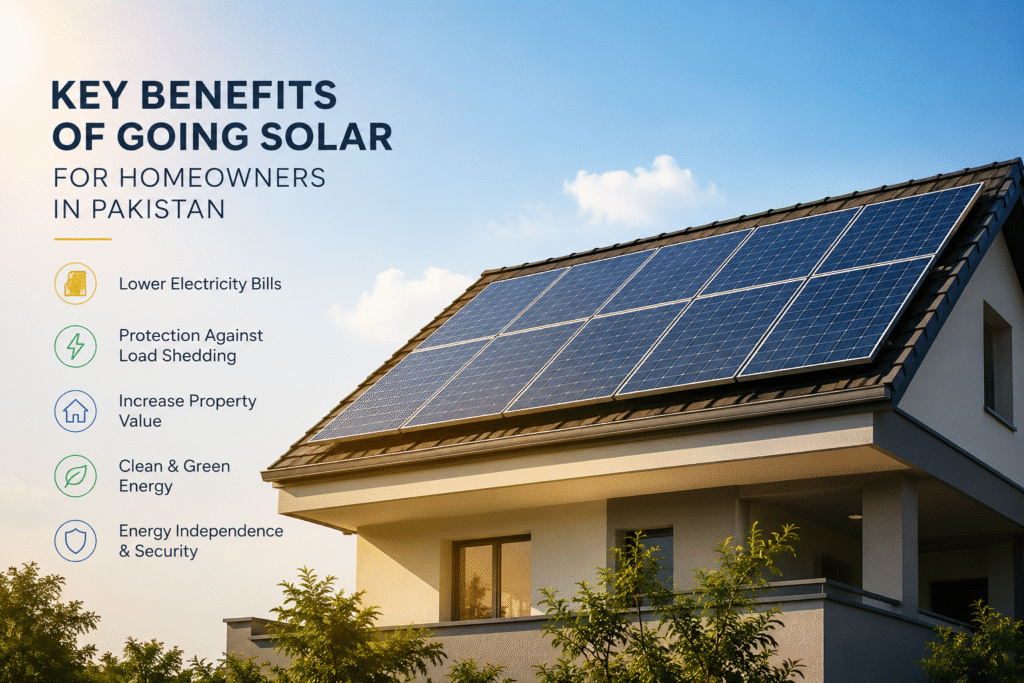
1. Protection Against Load Shedding
Electricity outages can disrupt daily routines. Hybrid systems ensure that essential appliances continue working even when grid power fails.
2. Lower Electricity Bills
By using solar power during the day, homeowners consume less electricity from the grid.
This results in:
- Lower monthly bills
- Reduced electricity dependency
- Long term savings
3. Energy Independence
A hybrid system gives homeowners greater control over their electricity supply. Instead of completely depending on the grid, you generate and store your own power.
4. Reduced Generator Dependence
Many Pakistani households use generators during outages.
However, generators require:
- Fuel
- Maintenance
- Regular servicing
Hybrid solar systems provide a cleaner and quieter alternative.
What Can a Hybrid Solar System Run?
The appliances you can run depend on your solar system size and battery capacity.
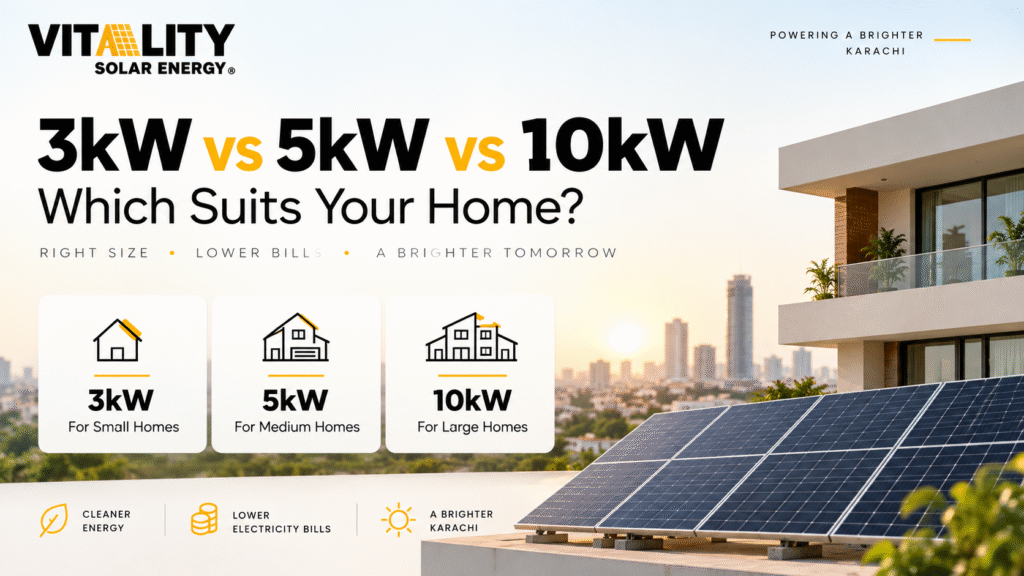
3kW Hybrid Solar System
Suitable for small homes.
Can run:
- Lights
- Fans
- Refrigerator
- Wi Fi router
- Television
- Small appliances
5kW Hybrid Solar System
Suitable for medium sized homes.
Can run:
- Multiple fans
- Lights
- Refrigerator
- TV
- Washing machine
- Water pump
- One inverter AC (limited usage)
7kW Hybrid Solar System
Suitable for larger homes.
Can run:
- Multiple AC units
- Refrigerators
- Freezers
- Home office equipment
- Water pumps
- Entertainment systems
10kW Hybrid Solar System
Suitable for large houses and high electricity users.
Can support:
- Multiple ACs
- Heavy appliances
- Complete lighting system
- Large backup requirements
How Long Does a Hybrid Solar Battery Last?
Battery backup duration depends on:
- Battery capacity
- Number of appliances running
- Energy consumption
- Battery type
For example:
A smaller battery may provide backup for essential appliances for several hours.
A larger battery system can provide power throughout the night or extended outages.
Lithium batteries generally provide better performance and longer lifespan compared to traditional battery technologies.
Installation Process of a Hybrid Solar System
Installing a hybrid solar system involves several steps.
1. Energy Assessment
Experts analyze:
- Electricity bills
- Appliance usage
- Backup requirements
- Future energy needs
2. System Design
A customized solar design is created based on:
- Required capacity
- Roof space
- Budget
- Energy goals
3. Equipment Selection
The right:
- Solar panels
- Inverter
- Batteries
- Protection equipment
4. Professional Installation
Solar panels are installed securely on the rooftop. Electrical connections are completed according to safety standards.
5. Testing and Monitoring
The system is tested to ensure:
- Proper performance
- Safety
- Maximum efficiency
Many modern systems also allow mobile monitoring.
How Vitality Solar Energy Helps You Install the Right Hybrid Solar System
Customized Hybrid Solar Solutions by Vitality Solar Energy
At Vitality Solar Energy, we help homeowners choose the right hybrid solar system based on their electricity usage, home size, and backup requirements. Our experts evaluate your energy needs and design a customized solar solution with high quality panels, efficient inverters, and reliable battery storage. From consultation and installation to system support, we ensure your home receives dependable power, reduced electricity costs, and protection against load shedding.
Maintenance Requirements of Hybrid Solar Systems
Hybrid solar systems require minimal maintenance.
Recommended practices include:
- Cleaning solar panels regularly
- Checking inverter performance
- Monitoring battery health
- Inspecting electrical connections
Proper maintenance improves efficiency and extends system lifespan.
Is a Hybrid Solar System Worth the Investment?
For many Pakistani homeowners, a hybrid solar system is a valuable long term investment.
Benefits include:
- Lower electricity bills
- Reliable backup power
- Reduced dependence on grid electricity
- Increased home energy security
- Cleaner energy production
Although the initial investment is higher than basic solar systems, the additional benefits make hybrid systems a preferred choice for many households.
Future of Hybrid Solar Energy in Pakistan
As electricity prices increase and energy challenges continue, hybrid solar systems are expected to become more common in Pakistani homes.
Advancements in:
- Battery technology
- Smart inverters
- Energy monitoring
- Solar panel efficiency
These systems more affordable and effective. The future of residential energy is moving toward smarter, cleaner, and more independent solutions.
Conclusion
A hybrid solar system is one of the most effective ways to achieve reliable and affordable electricity for Pakistani homes. By combining solar panels, batteries, and grid electricity, hybrid systems provide homeowners with the ability to generate their own power, store excess energy, and stay protected during load shedding.
Whether you want to reduce electricity bills, eliminate generator dependency, or create a more energy efficient home, a hybrid solar system offers a complete solution. With professional planning and installation from Vitality Solar Energy, homeowners can enjoy reliable electricity, long term savings, and a cleaner energy future.