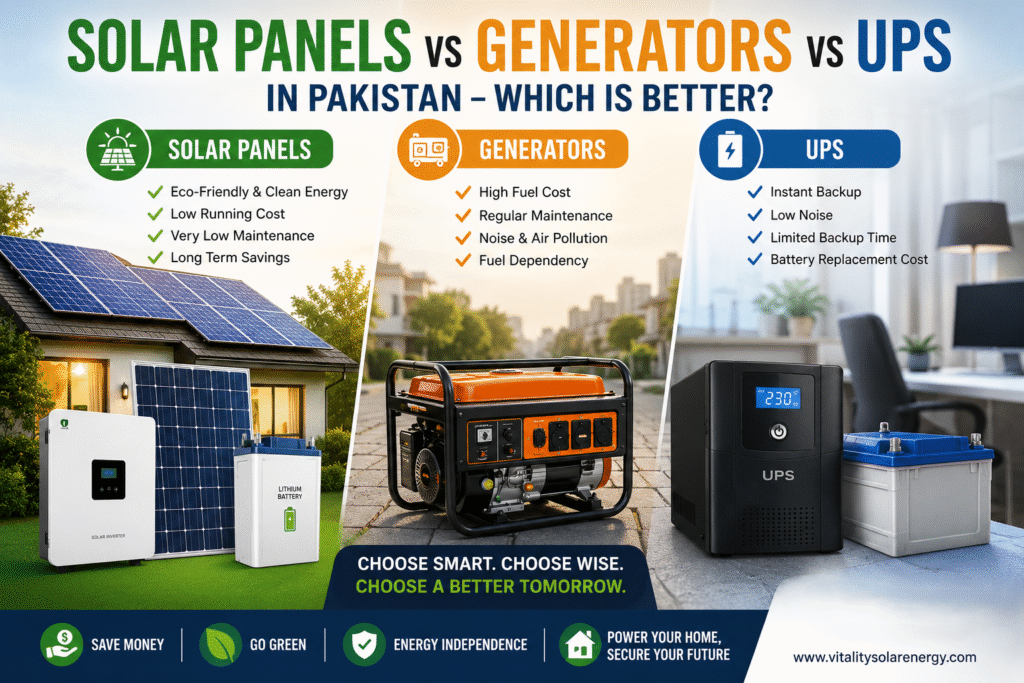
Power outages have become a common part of daily life in many areas of Pakistan. Whether you live in Karachi, Lahore, Islamabad, Rawalpindi, Faisalabad, Peshawar, or any other city, you have likely experienced the inconvenience of load shedding or unexpected power failures. These interruptions affect everything from household comfort and productivity to business operations and the safety of essential appliances. As electricity tariffs continue to rise and demand for uninterrupted power increases, homeowners are actively searching for reliable backup solutions. Traditionally, generators and UPS (Uninterruptible Power Supply) systems have been the most popular choices. However, with advancements in renewable energy technology, solar power has become a leading alternative that offers long term savings and energy independence.
Choosing between solar panels, generators, and UPS systems can be confusing because each option has its own advantages, limitations, costs, and ideal use cases. The right choice depends on factors such as your electricity consumption, budget, backup requirements, maintenance preferences, and long term goals. This guide provides a detailed comparison of solar panels, generators, and UPS systems for Pakistani homes. By the end of this article, you will understand how each solution works, their pros and cons, and which option is best suited for different residential situations.
Why Reliable Backup Power Is Essential in Pakistan
Electricity is no longer a luxury it is a necessity for modern living. Every home relies on power for lighting, cooling, communication, cooking, entertainment, security systems, and household appliances.
When electricity goes out, it can disrupt daily life in several ways:
- Fans and air conditioners stop working during hot weather.
- Refrigerators and freezers lose cooling, risking food spoilage.
- Internet routers shut down, affecting remote work and online learning.
- Security cameras and alarm systems become inactive.
- Businesses operating from home face interruptions and productivity losses.
For these reasons, homeowners need a dependable backup power solution that ensures essential appliances continue running during outages.
Understanding the Three Main Backup Power Solutions
Before comparing them, it’s important to understand how each system works.
What Are Solar Panels?
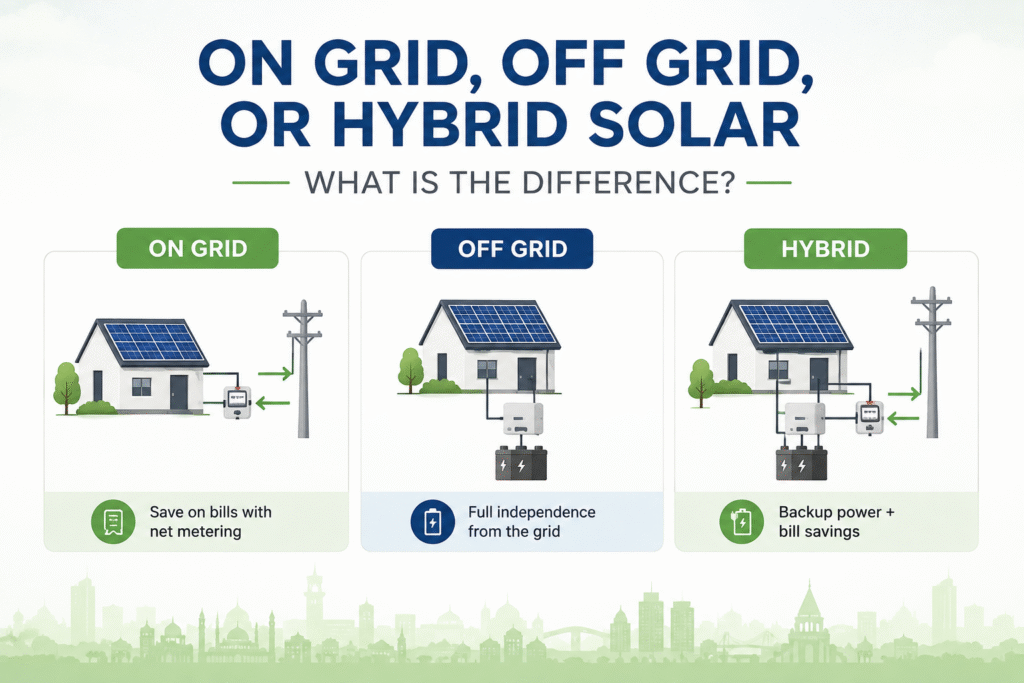
Solar panels convert sunlight into electricity using photovoltaic cells. The electricity generated can be used immediately to power your home, stored in batteries for later use, or exported to the utility grid through net metering
A residential solar setup usually includes:
- Solar panels
- Solar inverter
- Mounting structure
- Electrical protection devices
- Optional battery storage
Solar panels generate clean, renewable energy during daylight hours and require minimal maintenance once installed.
What Is a Generator?
A generator is a machine that produces electricity by converting mechanical energy into electrical energy. It is powered by fuels such as:
- Petrol
- Diesel
- Natural gas
When the utility power fails, the generator starts manually or automatically (depending on the model) and supplies electricity to the connected appliances. Generators have been widely used in Pakistan for decades because they can provide immediate backup power. However, they require regular fuel purchases, routine maintenance, and produce noise and emissions.
What Is a UPS?
A UPS is a battery based backup system that provides electricity instantly when the main power supply is interrupted. Unlike a generator, a UPS does not generate electricity. Instead, it stores electricity in batteries while grid power is available and releases that stored energy during outages.
A UPS system generally consists of:
- Inverter
- Battery bank
- Charging system
UPS units are commonly used to power:
- Lights
- Fans
- Computers
- Wi Fi routers
- Small household appliances
The backup duration depends on battery capacity and the total electrical load.
How Each System Works
Solar Panels
The process is straightforward:
- Solar panels capture sunlight.
- They generate direct current (DC) electricity.
- The inverter converts DC into alternating current (AC).
- The AC electricity powers household appliances.
- Any surplus electricity is stored in batteries (hybrid systems) or exported to the grid (on grid systems).
Because sunlight is free, solar energy reduces dependence on the utility grid and lowers monthly electricity bills.
Generator
A generator follows this process:
- Fuel is added to the generator.
- The engine starts.
- Mechanical energy is produced.
- The alternator converts mechanical energy into electricity.
- The generated electricity powers connected appliances.
The generator continues operating until fuel runs out or the main electricity supply returns.
UPS
A UPS system works as follows:
- Batteries charge while grid electricity is available.
- During a power outage, the UPS automatically switches to battery power.
- Stored electricity powers connected appliances.
- Once the electricity supply returns, the batteries recharge automatically.
Because the UPS relies entirely on stored battery energy, the backup duration is limited.
Comparing the Initial Investment
One of the first questions homeowners ask is, “Which option is the most affordable?” The answer depends on whether you are considering short term costs or long term value.
Solar Panels
A solar system generally requires the highest initial investment because it includes solar panels, an inverter, mounting equipment, and optionally battery storage.
However, once installed, the system generates electricity from sunlight, significantly reducing electricity bills and operating costs over the years.
Generator
Generators often have a lower purchase price than complete solar systems, making them attractive for homeowners looking for immediate backup power.
However, this lower initial cost is offset by ongoing expenses such as:
- Fuel
- Oil changes
- Engine servicing
- Repairs
- Spare parts
Over time, these recurring costs can become substantial.
UPS
A UPS system usually falls between the cost of a generator and a small solar setup. While the initial purchase price may be reasonable, batteries have a limited lifespan and require replacement after several years, adding to long term ownership costs.
Noise Levels
Another important consideration is how much noise each system produces.
Solar Panels
Solar panels operate silently. They have no moving mechanical parts, making them an excellent choice for homes where quiet operation is important.
Generator
Generators are the noisiest backup option. Depending on their size and model, they can produce significant engine noise, which may disturb family members and neighbors, especially during extended power outages.
UPS
UPS systems operate almost silently. The only sound usually comes from a small cooling fan or occasional inverter operation. This makes UPS units suitable for apartments and residential neighborhoods.
Environmental Impact
Environmental sustainability is becoming increasingly important for homeowners.
Solar Panels
Solar energy is one of the cleanest sources of electricity available.
Benefits include:
- Zero fuel consumption
- No greenhouse gas emissions during operation
- Reduced carbon footprint
- Renewable energy source
Solar systems contribute to cleaner air and a more sustainable future.
Generator
Generators rely on fossil fuels, producing:
- Carbon emissions
- Air pollution
- Noise pollution
Frequent generator use also increases fuel consumption and operating costs.
UPS
UPS systems themselves do not produce emissions during operation. However, they rely on electricity from the utility grid for charging, and their environmental impact depends on how that electricity is generated. Additionally, batteries require responsible recycling and disposal at the end of their lifespan.
Which Backup Solution Is Best for Modern Homes?
Each option serves a different purpose.
- Solar panels are ideal for homeowners looking for long term savings, clean energy, and reduced dependence on the utility grid.
- Generators are suitable for users who need high power backup immediately but are willing to manage fuel and maintenance.
- UPS systems are best for short duration backup of essential appliances during brief outages.
The best choice ultimately depends on your home’s energy requirements, budget, and long term priorities. In the next section, we will compare solar panels, generators, and UPS systems in detail, including costs, maintenance, fuel expenses, lifespan, appliance support, efficiency, and overall value for Pakistani homeowners.
Detailed Comparison: Solar Panels vs Generators vs UPS
Now that we’ve covered how each backup solution works, let’s compare them across the factors that matter most to homeowners in Pakistan. Understanding these differences will help you choose the right option based on your budget, energy requirements, and long term goals.
Comparison Table: Solar Panels vs Generators vs UPS
Feature | Solar Panels | Generator | UPS |
Electricity Source | Sunlight | Petrol, Diesel, or Gas | Stored Battery Power |
Backup During Load Shedding | Yes (Hybrid System) | Yes | Yes |
Monthly Running Cost | Very Low | High | Moderate |
Fuel Required | No | Yes | No |
Noise Level | Silent | High | Very Low |
Air Pollution | None | High | None During Use |
Maintenance | Low | High | Moderate |
Lifespan | 25–30 Years (Panels) | 8–15 Years | 5–10 Years (Depending on Batteries) |
Electricity Bill Savings | Excellent | None | None |
Eco Friendly | Yes | No | Partially |
Ideal For | Long Term Homeowners | Emergency Backup | Short Term Backup |
This comparison clearly shows that while generators and UPS systems provide temporary relief during outages, solar energy offers additional long term benefits such as electricity bill savings, reduced dependence on the grid, and environmental sustainability.
Running Cost Comparison
One of the biggest differences between these three solutions is their ongoing operating cost.
Solar Panels
After installation, solar panels generate electricity from sunlight at virtually no fuel cost.
The primary operating expenses include:
- Occasional cleaning
- Routine inspections
- Minimal maintenance
Since sunlight is free, homeowners can enjoy years of electricity generation without recurring fuel expenses.
Generator
Generators have the highest operating cost because they require continuous fuel consumption.
Typical ongoing expenses include:
- Petrol or diesel
- Engine oil
- Air filters
- Maintenance
- Repairs
- Periodic servicing
During extended load shedding, fuel costs can increase significantly, making generators expensive to operate over time.
UPS
A UPS has lower running costs than a generator because it does not require fuel. However, electricity is needed to recharge the batteries after every outage, and battery replacements every few years add to the overall ownership cost.
Maintenance Requirements
Maintenance is another important factor when choosing a backup power solution.
Solar Panels
Solar systems require very little maintenance.
Typical maintenance includes:
- Cleaning dust and debris from the panels
- Inspecting wiring
- Monitoring inverter performance
- Occasional professional inspections
With proper care, solar panels continue operating efficiently for decades.
Generator
Generators require regular maintenance to ensure reliable performance.
Common maintenance tasks include:
- Changing engine oil
- Replacing filters
- Checking spark plugs
- Fuel system cleaning
- Battery inspection
- Mechanical servicing
Neglecting maintenance can reduce efficiency and increase the risk of breakdowns.
UPS
UPS systems require moderate maintenance.
This generally involves:
- Monitoring battery health
- Replacing batteries when necessary
- Inspecting inverter connections
- Ensuring proper ventilation
Battery replacement is one of the largest maintenance expenses for UPS owners.
Lifespan Comparison
A backup power solution is a long term investment, making lifespan an important consideration.
Solar Panels
Modern solar panels typically last between 25 and 30 years, while high quality inverters usually have a lifespan of 10 to 15 years. Batteries in hybrid systems can also provide many years of reliable service depending on the technology and usage. This makes solar one of the longest lasting residential energy solutions available.
Generator
Most residential generators last between 8 and 15 years, depending on:
- Usage frequency
- Maintenance quality
- Fuel quality
- Operating conditions
Heavy daily use can shorten the generator’s lifespan.
UPS
The UPS unit itself may last several years, but the batteries generally need replacement every 3 to 7 years, depending on battery type, charging cycles, and maintenance.
Performance During Load Shedding
Load shedding is one of the main reasons homeowners invest in backup power systems. Let’s compare how each solution performs during outages.
Solar Panels
A hybrid solar system with battery storage provides automatic backup during load shedding.
Benefits include:
- Instant power switching
- Silent operation
- No fuel requirements
- Long backup duration
For many households, this creates a seamless experience during power outages.
Generator
Generators can power a large number of appliances during outages.
However, they require:
- Fuel availability
- Manual or automatic startup
- Regular maintenance
- Ventilation for exhaust gases
If fuel runs out, backup power stops immediately.
UPS
UPS systems switch to battery power instantly, making them ideal for sensitive electronics.
However, backup time is limited and depends on:
- Battery capacity
- Number of connected appliances
- Total electrical load
UPS systems are best suited for short duration outages.
Which Appliances Can Each System Run?
Understanding appliance compatibility helps homeowners choose the right solution.
Solar Panels (Hybrid Systems)
Depending on system size, solar energy can power:
- LED lights
- Ceiling fans
- Refrigerators
- Freezers
- Televisions
- Wi Fi routers
- Desktop computers
- Laptops
- Washing machines
- Water pumps
- Inverter air conditioners
- Kitchen appliances
- Security systems
Larger systems can support nearly the entire household.
Generator
A properly sized generator can power:
- Air conditioners
- Refrigerators
- Water pumps
- Heavy appliances
- Lighting
- Fans
- Commercial equipment
The capacity depends on generator size and fuel consumption.
UPS
UPS systems generally support essential appliances only.
Common loads include:
- LED lights
- Ceiling fans
- Wi Fi routers
- Television
- Laptop
- Desktop computer
Running heavy appliances such as air conditioners or electric heaters significantly reduces backup duration.
Fuel Dependency
One of the biggest differences between these systems is fuel dependency.
Solar Panels
- No fuel required
- Powered entirely by sunlight
- Renewable energy source
- No recurring fuel expense
Generator
Generators rely completely on fuel.
This means homeowners must regularly purchase:
- Petrol
- Diesel
- Gas
Fuel shortages or rising fuel prices directly increase operating costs.
UPS
UPS systems do not require fuel. Instead, they depend on electricity from the utility grid to recharge their batteries.
Safety Comparison
Safety should always be considered when selecting a backup power solution.
Solar Panels
Properly installed solar systems are very safe.
Modern installations include:
- Surge protection
- Circuit breakers
- Grounding systems
- Fire protection measures
Professional installation greatly reduces risks.
Generator
Generators require careful handling because they involve:
- Flammable fuel
- Hot engine components
- Exhaust gases
- Carbon monoxide emissions
Improper operation can create serious safety hazards.
UPS
UPS systems are generally safe but require:
- Proper ventilation
- Correct battery maintenance
- Professional installation
- Safe battery disposal
Battery care is essential for reliable performance.
Reliability Comparison
Reliability is one of the most important considerations for homeowners.
Solar Panels
Solar systems provide highly reliable electricity during daylight hours, and hybrid systems continue supplying power during outages using battery storage. With minimal moving parts, breakdowns are relatively uncommon.
Generator
Generators are dependable if properly maintained and supplied with fuel. However, mechanical wear and fuel related issues can occasionally cause failures.
UPS
UPS systems provide instant backup but are limited by battery capacity. Long power outages may exhaust the batteries before electricity returns.
Which Option Offers the Best Long Term Value?
When comparing all three solutions over many years, several differences become clear.
Solar Panels
- Lowest operating cost
- Longest lifespan
- Significant electricity bill savings
- Clean and renewable energy
- Minimal maintenance
Generator
- Strong backup capability
- High fuel and maintenance costs
- No electricity bill reduction
- Noise and emissions
UPS
- Instant backup
- Quiet operation
- Suitable for essential appliances
- Limited backup duration
- Periodic battery replacement
For homeowners planning to stay in their property for many years, solar energy often provides the greatest long term value due to reduced electricity bills, low maintenance requirements, and dependable performance.