Solar energy has become one of the fastest growing renewable energy solutions in Pakistan. With rising electricity prices, frequent load shedding, and an increasing demand for reliable power, homeowners are looking for smarter ways to reduce electricity costs while ensuring uninterrupted energy for their families. One of the first decisions people face when switching to solar energy is choosing the right type of solar panel. While many homeowners focus only on price, selecting the appropriate solar panel technology is equally important because it directly affects electricity production, efficiency, durability, and long term savings.
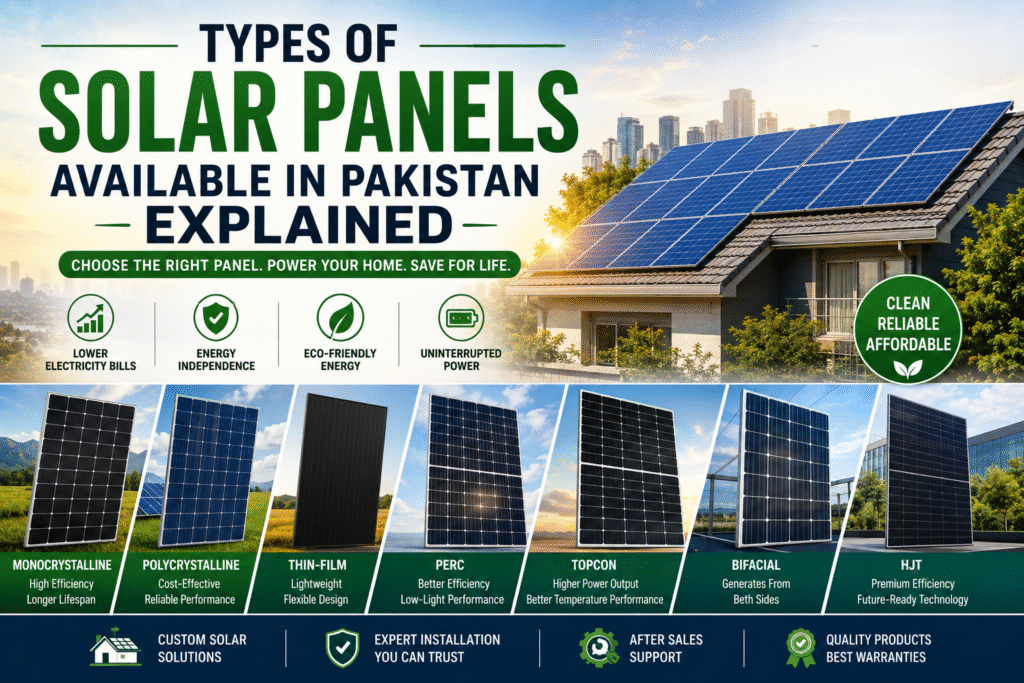
Today, the Pakistani market offers several types of solar panels, each designed to meet different energy needs, budgets, and installation requirements. From highly efficient monocrystalline panels to advanced TOPCon and bifacial technologies, homeowners have more choices than ever before. However, choosing the wrong panel can lead to lower energy production, reduced efficiency during hot weather, and a longer return on investment.
This comprehensive guide explains the different types of solar panels available in Pakistan, how they work, their advantages and disadvantages, and which option may be the most suitable for residential homes. Whether you’re planning to install a small rooftop system or a larger hybrid solar setup, understanding these technologies will help you make a more informed decision.
Why Solar Energy Is Growing Rapidly in Pakistan
Pakistan receives abundant sunshine throughout the year, making it one of the best countries for solar energy generation. Cities such as Karachi, Lahore, Islamabad, Faisalabad, Multan, Hyderabad, and Peshawar experience long hours of sunlight, allowing solar panels to generate significant amounts of electricity throughout most of the year.
At the same time, homeowners face several energy related challenges, including:
- Rising electricity tariffs
- Frequent load shedding
- High generator fuel costs
- Increasing demand for uninterrupted power
- Growing awareness of renewable energy
These factors have made residential solar systems an increasingly attractive investment.
What Are Solar Panels?
Solar panels are devices that convert sunlight into electricity using photovoltaic (PV) technology. Each solar panel contains multiple photovoltaic cells that absorb sunlight and produce direct current (DC) electricity. Since most household appliances use alternating current (AC), the generated electricity passes through a solar inverter, which converts DC electricity into AC electricity suitable for residential use.
Depending on your solar system configuration, the electricity can be:
- Used immediately to power your home
- Stored in batteries for backup
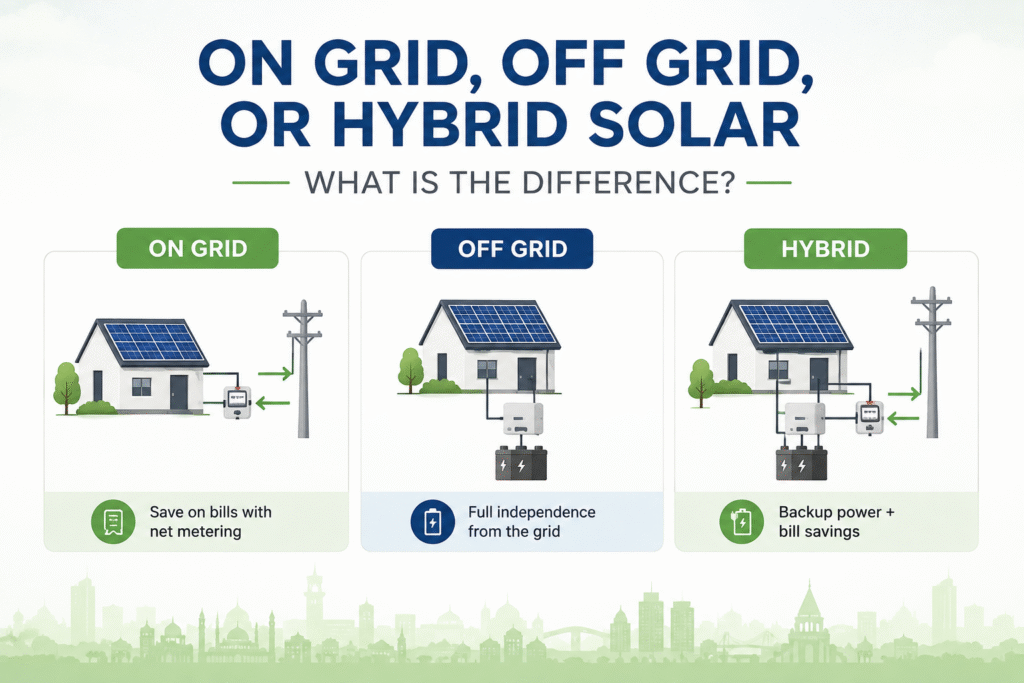
- Exported to the utility grid through net metering
Solar panels serve as the primary energy generating component of every residential solar system.
How Do Solar Panels Work?
The process is simple but highly efficient.
Step 1: Sunlight Hits the Solar Panels
Solar cells absorb sunlight during daylight hours.
Step 2: Photovoltaic Cells Generate Electricity
The absorbed sunlight creates an electrical reaction that produces DC electricity.
Step 3: Solar Inverter Converts Electricity
The inverter converts DC electricity into AC electricity that can safely power your home.
Step 4: Electricity Powers Household Appliances
Generated electricity runs household equipment such as:
- Fans
- Lights
- Refrigerators
- Air conditioners
- Washing machines
- Computers
- Water pumps
- Televisions
- Kitchen appliances
Step 5: Excess Electricity Is Stored or Exported
Depending on your system type:
- Hybrid systems store excess electricity in batteries.
- On grid systems send surplus electricity to the utility grid through net metering.
Why Choosing the Right Solar Panel Matters
Many homeowners assume that all solar panels perform the same way.
In reality, different panel technologies vary in:
- Efficiency
- Performance during high temperatures
- Durability
- Appearance
- Warranty
- Cost
- Lifespan
- Power generation
Selecting the right panel can significantly impact your system’s overall performance for the next 25 years or more.
Factors to Consider Before Choosing Solar Panels
Before selecting a solar panel, homeowners should evaluate several important factors.
1. Energy Consumption
Your monthly electricity usage helps determine the size and type of solar panel system required. Homes with higher electricity demand often benefit from higher efficiency panels.
2. Available Roof Space
Roof size directly affects how many panels can be installed. If roof space is limited, high efficiency panels allow more electricity generation within a smaller area.
3. Budget
Different solar panel technologies vary in price. Some offer lower upfront costs, while others provide greater long term savings through higher efficiency.
4. Weather Conditions
Pakistan experiences:
- High temperatures
- Dust
- Humidity (especially in Karachi)
- Monsoon rainfall
- Strong sunlight
Choosing panels that perform well under these conditions helps maximize energy production.
5. Future Energy Needs
Many homeowners later purchase:
- Additional air conditioners
- Electric vehicles
- Water pumps
- Home offices
- New household appliances
Planning for future electricity requirements can help avoid expensive system upgrades later.
Main Types of Solar Panels Available in Pakistan
The Pakistani solar market now offers several advanced technologies.
The most common types include:
- Monocrystalline Solar Panels
- Polycrystalline Solar Panels
- Thin Film Solar Panels
- PERC Solar Panels
- TOPCon Solar Panels
- Bifacial Solar Panels
- HJT (Heterojunction) Solar Panels
Each technology has unique characteristics that make it suitable for different residential applications. Let’s briefly introduce each one before exploring them in detail.
Monocrystalline Solar Panels
Monocrystalline panels are considered one of the highest quality residential solar panel technologies.
They are manufactured using a single crystal silicon structure, resulting in:
- Higher efficiency
- Better performance
- Longer lifespan
- Premium appearance
These panels are widely used in modern residential solar installations across Pakistan because they generate more electricity using less roof space. They are particularly suitable for homeowners looking for maximum long term performance.
Polycrystalline Solar Panels
Polycrystalline panels are manufactured using multiple silicon crystals.
Compared to monocrystalline panels, they generally offer:
- Lower purchase cost
- Good reliability
- Moderate efficiency
These panels have been popular for many years and remain a practical option for homeowners with larger roof areas and moderate energy requirements.
Thin Film Solar Panels
Thin film panels use a different manufacturing process than traditional silicon panels.
They are:
- Lightweight
- Flexible
- Easier to install on certain surfaces
However, they generally produce less electricity per square meter compared to crystalline silicon panels. Because of their lower efficiency, thin film panels are less common for residential rooftop installations in Pakistan.
PERC Solar Panels
PERC stands for Passivated Emitter and Rear Cell technology. These panels improve upon conventional monocrystalline technology by adding a reflective layer to the back of the solar cells.
Benefits include:
- Higher efficiency
- Better low light performance
- Improved electricity generation
- Better performance in hot climates
PERC technology has become increasingly common in residential solar systems.
TOPCon Solar Panels
TOPCon stands for Tunnel Oxide Passivated Contact technology. It is considered one of the newest advancements in solar panel manufacturing.
Advantages include:
- Very high efficiency
- Lower energy loss
- Better performance during hot weather
- Longer lifespan
- Improved low light generation
Many premium residential installations now use TOPCon panels due to their excellent performance and future ready technology.
Bifacial Solar Panels
Unlike conventional panels that generate electricity from only the front side, bifacial panels produce electricity from both the front and rear surfaces.
This allows them to capture reflected sunlight from:
- Roof surfaces
- Concrete
- White rooftops
- Ground reflection
As a result, they can generate more electricity under suitable installation conditions.
HJT (Heterojunction) Solar Panels
HJT technology combines crystalline silicon with thin film layers.
These advanced panels provide:
- Extremely high efficiency
- Excellent temperature performance
- Lower energy losses
- Longer operational life
Although HJT panels are currently more expensive, they are becoming increasingly popular in premium residential projects.
Which Solar Panel Technology Is Becoming Most Popular?
The Pakistani solar market has evolved rapidly over the past few years. While polycrystalline panels were once the most common choice, many homeowners now prefer newer technologies because they provide:
- Higher electricity generation
- Better efficiency
- Improved durability
- Greater long term savings
Modern residential installations increasingly use advanced monocrystalline, PERC, and TOPCon panels because they offer superior performance while maximizing rooftop space. In the next section, we’ll compare each solar panel type in detail, including efficiency, lifespan, cost, advantages, disadvantages, temperature performance, and which technology is best suited for Pakistani homes.
Monocrystalline Solar Panels
Monocrystalline solar panels are widely regarded as one of the highest performing solar technologies available for residential use. They are manufactured using a single, pure silicon crystal, which allows electrons to move more efficiently and produce higher amounts of electricity.
These panels are easily recognized by their uniform black appearance and sleek design. Because of their high efficiency, they are one of the most popular choices for modern homes in Pakistan, particularly in cities where rooftop space is limited.
Advantages of Monocrystalline Solar Panels
- High energy efficiency
- Excellent performance in hot climates
- Better electricity production per square meter
- Attractive all black appearance
- Long operational lifespan
- Performs well during cloudy conditions
- Ideal for hybrid solar systems
Disadvantages
- Higher initial investment
- Premium technology compared to basic panel types
Best For
Monocrystalline panels are ideal for:
- Residential homes
- Villas
- Small rooftops
- High electricity users
- Homeowners looking for maximum long term savings
Polycrystalline Solar Panels
Polycrystalline solar panels have been used in Pakistan for many years and remain a practical option for many homeowners. Instead of using a single silicon crystal, these panels are manufactured from multiple silicon fragments melted together. This manufacturing process makes them more affordable, although slightly less efficient than monocrystalline panels.
Advantages
- Lower purchase cost
- Reliable performance
- Proven technology
- Suitable for larger roof areas
Disadvantages
- Lower efficiency
- Requires more installation space
- Slightly reduced performance during extremely hot weather
Best For
Polycrystalline panels are suitable for:
- Budget conscious homeowners
- Homes with large rooftops
- Moderate electricity consumption
Thin Film Solar Panels
Thin film solar panels are significantly different from traditional crystalline silicon panels. Instead of thick silicon wafers, these panels use very thin photovoltaic layers deposited onto flexible materials. Because they are lightweight and flexible, they are commonly used in commercial projects and specialized applications rather than standard residential rooftops.
Advantages
- Lightweight
- Flexible installation
- Performs reasonably well in partial shading
- Easier transportation
Disadvantages
- Lowest efficiency among common solar technologies
- Requires significantly more roof space
- Shorter lifespan compared to crystalline panels
Best For
Thin film panels are generally recommended for:
- Large commercial roofs
- Industrial facilities
- Temporary structures
They are usually not the first choice for residential homes in Pakistan.
PERC Solar Panels
PERC stands for Passivated Emitter and Rear Cell technology. This is an improved version of conventional monocrystalline solar panels. An additional reflective layer is added behind the solar cells, allowing more sunlight to be captured instead of being lost.
This improvement increases electricity generation without requiring additional roof space.
Advantages
- Higher efficiency than standard monocrystalline panels
- Better performance in low light conditions
- Improved electricity generation
- Better heat tolerance
- Excellent long term reliability
Disadvantages
- Slightly more expensive than traditional panels
- Requires professional installation for maximum performance
Best For
PERC panels are ideal for:
- Residential homes
- Medium sized rooftops
- Families with growing electricity needs
- Areas experiencing frequent high temperatures
TOPCon Solar Panels
TOPCon stands for Tunnel Oxide Passivated Contact technology. This is considered one of the newest and most advanced solar panel technologies available today. TOPCon panels improve electrical conductivity inside the solar cell while reducing energy losses.
The result is higher electricity production and better overall efficiency.
Advantages
- Extremely high efficiency
- Excellent performance during hot weather
- Better electricity generation throughout the day
- Lower degradation over time
- Longer lifespan
- Excellent performance during cloudy weather
Disadvantages
- Higher initial investment
- Premium technology
Best For
TOPCon panels are highly recommended for:
- Premium residential homes
- Limited roof space
- Long term investments
- Homeowners seeking maximum performance
Bifacial Solar Panels
Unlike traditional solar panels that collect sunlight only from the front surface, bifacial panels generate electricity from both sides.
The rear side captures reflected sunlight from:
- White rooftops
- Concrete surfaces
- Ground reflection
- Metal roofs
This additional energy production can improve overall system output under suitable installation conditions.
Advantages
- Higher energy production
- Better efficiency under reflective conditions
- Long lifespan
- Excellent durability
Disadvantages
- Higher installation cost
- Requires specialized mounting systems
- Performance depends on installation location
Best For
Bifacial panels work best in:
- Open rooftops
- Commercial buildings
- Large residential properties
- Elevated mounting structures
HJT (Heterojunction) Solar Panels
HJT, or Heterojunction Technology, combines crystalline silicon with thin film layers to create one of the most efficient solar panels currently available. This advanced technology minimizes energy losses while improving electricity generation.
Advantages
- Outstanding efficiency
- Exceptional performance during hot weather
- Excellent low light performance
- Longer operational lifespan
- Lower annual degradation
Disadvantages
- Higher purchase cost
- Premium technology with limited availability
Best For
HJT panels are suitable for:
- Luxury homes
- High end residential projects
- Homeowners seeking maximum efficiency
- Long term energy independence
Solar Panel Efficiency Comparison
One of the most important factors when selecting solar panels is efficiency. Higher efficiency means more electricity can be generated using the same roof space.
Solar Panel Type | Efficiency | Roof Space Required |
HJT | Excellent | Very Low |
TOPCon | Excellent | Very Low |
Monocrystalline | Very High | Low |
PERC | Very High | Low |
Bifacial | Very High | Low to Medium |
Polycrystalline | Moderate | Medium |
Thin Film | Low | High |
For homeowners with limited rooftop space, higher efficiency panels usually provide better long term value.
Lifespan Comparison
Solar panels are long term investments.
Choosing durable technology reduces replacement costs and improves return on investment.
Solar Panel Type | Expected Lifespan |
HJT | 30+ Years |
TOPCon | 30+ Years |
Monocrystalline | 25 to 30 Years |
PERC | 25 to 30 Years |
Bifacial | 25 to 30 Years |
Polycrystalline | 25 Years |
Thin Film | 15 to 20 Years |
Temperature Performance
Pakistan experiences high summer temperatures, especially in cities like Karachi, Multan, Bahawalpur, and Hyderabad. Heat affects electricity production. Some panel technologies handle heat much better than others.
Best Heat Performance
- HJT
- TOPCon
- PERC
Good Heat Performance
- Monocrystalline
Moderate Heat Performance
- Polycrystalline
Variable Heat Performance
- Thin Film (depends on technology)
For hot climates, choosing panels with excellent temperature performance can improve annual electricity production.
Which Solar Panel Produces the Most Electricity?
When comparing electricity generation under similar conditions:
- HJT Panels
- TOPCon Panels
- Monocrystalline Panels
- PERC Panels
- Bifacial Panels (installation dependent)
- Polycrystalline Panels
- Thin Film Panels
Although actual output depends on installation quality and weather conditions, higher efficiency technologies generally produce more electricity over their lifetime.
Cost Comparison
While prices vary depending on brand, warranty, and market conditions, solar panel technologies generally follow this order:
Most Affordable
- Polycrystalline
Moderate Price
- Monocrystalline
- PERC
Premium Pricing
- TOPCon
- Bifacial
- HJT
Although premium panels require a higher initial investment, many homeowners recover these costs through improved electricity production and long term savings.
Which Solar Panel Is Becoming the Preferred Choice?
The Pakistani residential solar market is gradually shifting toward newer technologies.
Many homeowners now choose:
- Monocrystalline
- PERC
- TOPCon
because they offer:
- Better efficiency
- Improved durability
- Higher electricity generation
- Better return on investment
- Excellent performance during Pakistan’s hot summers
These technologies have become increasingly popular for residential rooftop installations where maximizing energy production from limited roof space is a priority.
Which Solar Panel Is Best for Pakistani Weather?
Pakistan’s climate plays a major role in determining how efficiently a solar panel performs. While the country enjoys abundant sunshine throughout the year, homeowners also have to deal with high temperatures, dust storms, humidity in coastal regions, and seasonal rainfall. These environmental conditions make it important to choose a panel that is not only efficient but also durable enough to maintain strong performance over time.
For most residential installations, modern monocrystalline, PERC, and TOPCon panels are excellent choices because they perform well in hot climates and continue generating electricity efficiently even during extreme summer temperatures.
Which Solar Panel Is Best for Karachi?
Karachi offers one of the best environments for solar energy because it receives strong sunlight for most of the year. However, the city also presents unique challenges such as:
- High temperatures
- Coastal humidity
- Dust accumulation
- Salt in the air near coastal areas
- Monsoon weather
These conditions require solar panels that offer strong heat resistance and long term durability.
Recommended Panel Types for Karachi
- TOPCon Solar Panels : Excellent heat tolerance and high efficiency.
- Monocrystalline Solar Panels : Reliable performance with limited roof space.
- PERC Solar Panels : Improved efficiency and better low light performance.
- HJT Solar Panels : Premium option with outstanding temperature performance.
Regular cleaning is especially important in Karachi because dust and pollution can reduce panel efficiency if left unattended.
Which Solar Panel Is Best for Small Homes?
Homeowners with limited roof space need to maximize electricity production from every panel installed.
For small houses, apartments, and compact rooftops, the best options are:
- Monocrystalline Panels
- TOPCon Panels
- HJT Panels
These technologies generate more electricity using fewer panels, making them ideal where installation space is limited.
Which Solar Panel Is Best for Medium Sized Homes?
Medium sized homes generally have more roof space and higher electricity consumption.
Recommended options include:
- Monocrystalline Panels
- PERC Panels
- TOPCon Panels
These technologies provide an excellent balance between efficiency, performance, and long term value.
Which Solar Panel Is Best for Large Homes?
Large homes often require larger solar systems capable of powering multiple air conditioners, water pumps, and other high energy appliances.
Recommended technologies include:
- TOPCon Panels
- HJT Panels
- Bifacial Panels
These panels help maximize electricity generation while reducing long term operating costs.
Which Solar Panel Is Best for Hybrid Solar Systems?
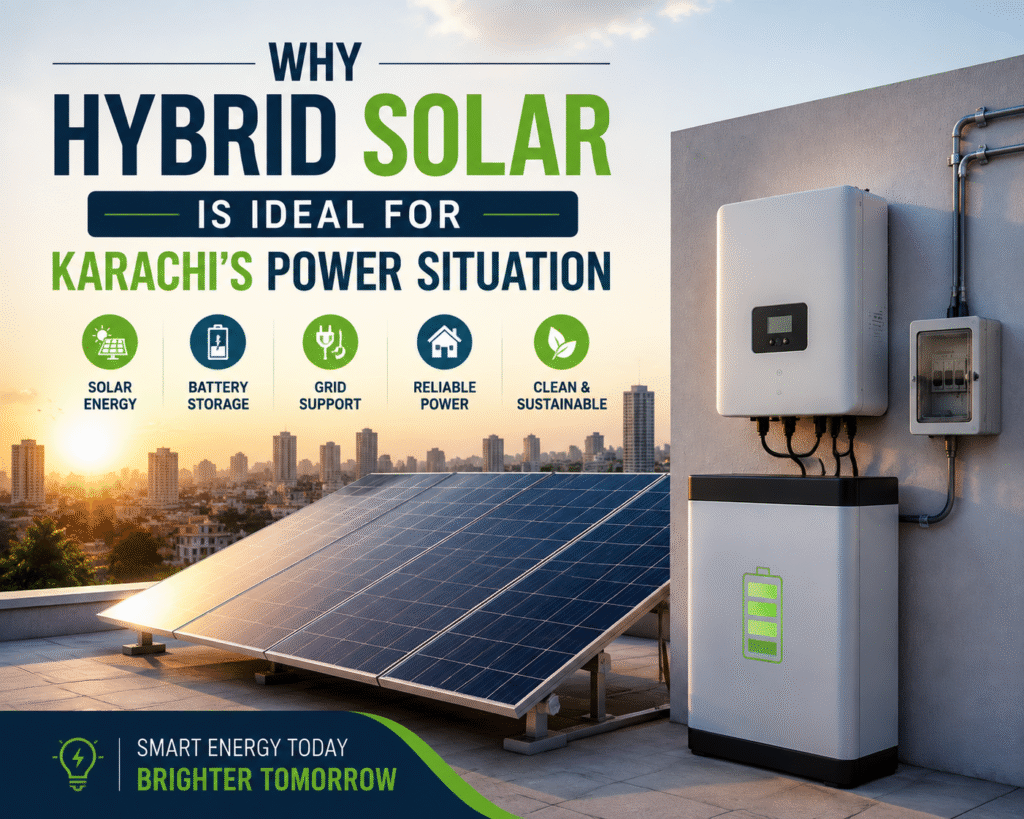
Hybrid solar systems combine solar panels, battery storage, and grid connectivity. Since hybrid systems are designed to provide both electricity savings and backup power during load shedding, choosing high efficiency panels is particularly important.
The most suitable options are:
- Monocrystalline Panels
- PERC Panels
- TOPCon Panels
These technologies produce higher energy output, allowing batteries to charge more efficiently during daylight hours.
Solar Panel Maintenance Guide
Solar panels require relatively little maintenance compared to many other energy systems, but regular care helps maintain peak performance.
Clean the Panels Regularly
Dust, leaves, bird droppings, and pollution can reduce sunlight absorption. Cleaning the panels every few weeks or more often in dusty areas can improve energy production.
Inspect for Physical Damage
Check periodically for:
- Cracked glass
- Loose wiring
- Damaged mounting brackets
- Corrosion
- Water intrusion
Professional inspections can identify issues before they affect system performance.
Monitor System Performance
Many modern inverters and monitoring apps allow homeowners to track daily electricity generation.
Unexpected drops in production may indicate:
- Dirty panels
- Shading
- Equipment faults
- Inverter issues
Monitoring helps ensure your system continues operating efficiently.
Trim Nearby Trees
Growing trees can create shade over time. Even partial shading can reduce the output of an entire panel string. Keeping the installation area free from excessive shading improves electricity production.
Common Myths About Solar Panels
Despite the growing popularity of solar energy, several misconceptions still exist.
Myth 1: Solar Panels Only Work in Extremely Hot Weather
Reality:
Solar panels generate electricity from sunlight not heat. In fact, excessive heat can slightly reduce efficiency. Modern technologies such as TOPCon and HJT are specifically designed to perform better in high temperatures.
Myth 2: Solar Panels Do Not Work on Cloudy Days
Reality:
Solar panels continue generating electricity under cloudy conditions. Although production is lower than on bright sunny days, modern high efficiency panels can still produce useful amounts of energy.
Myth 3: Solar Panels Require Constant Maintenance
Reality:
Most residential solar systems require only occasional cleaning and periodic inspections. Compared to generators, maintenance requirements are minimal.
Myth 4: All Solar Panels Are the Same
Reality:
Different technologies offer varying levels of:
- Efficiency
- Durability
- Heat resistance
- Lifespan
- Cost
- Energy production
Choosing the right technology can significantly improve long term performance.
How to Choose the Right Solar Panel
When selecting solar panels for your home, consider the following factors:
Your Monthly Electricity Consumption
Higher energy usage generally benefits from higher efficiency panels.
Roof Size
Limited roof space favors technologies such as:
- Monocrystalline
- TOPCon
- HJT
These panels produce more electricity per square meter.
Budget
While lower cost panels may reduce initial investment, premium technologies often provide better long term value through improved electricity generation.
Future Energy Needs
If you plan to install:
- Additional air conditioners
- Electric vehicle charging
- Home office equipment
- Water pumps
choose a system that can accommodate future expansion.
Backup Requirements
If your goal is uninterrupted electricity during load shedding, consider pairing high efficiency panels with a hybrid solar system and battery storage.
Frequently Asked Questions
Which type of solar panel is best in Pakistan?
For most residential homes, Monocrystalline, PERC, and TOPCon panels are among the best choices because they offer excellent efficiency, durability, and performance in Pakistan’s climate.
Which solar panel lasts the longest?
Modern HJT, TOPCon, Monocrystalline, and PERC panels can operate efficiently for 25 to 30 years or more with proper maintenance.
Are expensive solar panels worth it?
Higher quality panels often provide:
- Better electricity generation
- Higher efficiency
- Longer lifespan
- Greater long term savings
Although the initial investment is higher, many homeowners benefit from lower electricity costs over the system’s lifetime.
Can solar panels reduce electricity bills?
Yes. A properly designed solar system can significantly reduce dependence on grid electricity, leading to substantial long term savings on monthly electricity bills.
Do solar panels work during load shedding?
Hybrid solar systems with battery storage can continue supplying electricity during load shedding, allowing essential appliances to keep running. Standard on grid systems typically shut down during outages unless backup equipment is installed.
How often should solar panels be cleaned?
Cleaning frequency depends on local conditions. In dusty areas such as Karachi, cleaning every few weeks or whenever significant dust accumulates can help maintain optimal performance.
Which solar panel is best for homes with limited roof space?
Monocrystalline, TOPCon, and HJT panels are ideal because they produce more electricity from a smaller installation area.
Which panel technology offers the best long term value?
For many homeowners, TOPCon and Monocrystalline panels provide an excellent combination of efficiency, reliability, durability, and return on investment.
Common Mistakes to Avoid When Buying Solar Panels
Installing a solar system is a long term investment that can provide reliable electricity for decades. However, choosing the wrong solar panels or working with inexperienced installers can reduce system performance and increase long term costs. Here are some common mistakes homeowners should avoid.
Choosing Panels Based Only on Price
One of the biggest mistakes is selecting the cheapest solar panels without considering quality and efficiency. While lower priced panels may reduce the initial investment, they may generate less electricity, degrade faster, or require more roof space. In many cases, investing in higher quality panels provides better long term savings.
Ignoring Roof Space
Not every home has unlimited rooftop space. If your roof is small, installing high efficiency panels such as Monocrystalline, TOPCon, or HJT can generate more electricity from the available area. Choosing lower efficiency panels may limit the total system capacity.
Not Considering Future Electricity Needs
Many homeowners size solar system only for current electricity usage.
However, future additions such as:
- Air conditioners
- Electric vehicle chargers
- Home office equipment
- Water pumps
- Kitchen appliances
can significantly increase energy consumption.
Planning for future expansion helps avoid costly upgrades later.
Overlooking Product Warranties
A solar panel is expected to perform for more than two decades. Always review the manufacturer’s product warranty and performance warranty before making a decision. Reliable panels generally come with long term warranties that provide added peace of mind.
Hiring Unqualified Installers
Even the best solar panels cannot perform efficiently if they are installed incorrectly.
Professional installation ensures:
- Proper panel orientation
- Secure mounting
- Safe electrical connections
- Maximum sunlight exposure
- Long term system reliability
Working with experienced professionals reduces installation risks and helps maximize your investment.
How Vitality Solar Energy Helps You Choose the Right Solar Panels
Expert Residential Solar Solutions
Choosing the right solar panel technology can feel overwhelming, especially with so many options available in the market. At Vitality Solar Energy, we simplify the process by carefully evaluating your home’s electricity usage, roof size, budget, and future energy requirements before recommending a customized solar solution. Whether you’re considering high efficiency Monocrystalline panels, advanced TOPCon technology, or a hybrid solar system with battery backup, our experienced team helps you select the ideal system for maximum performance and long term savings. From consultation and professional installation to ongoing support, we are committed to delivering reliable residential solar solutions that help homeowners reduce electricity bills and enjoy dependable power throughout the year.
Why More Pakistani Homeowners Are Choosing Advanced Solar Panels
The residential solar market in Pakistan has changed significantly over the last few years.
Instead of focusing only on upfront costs, homeowners are now prioritizing:
- Higher efficiency
- Long term savings
- Better warranty coverage
- Reliable performance
- Lower maintenance
- Protection against rising electricity costs
- Backup power during load shedding
Modern technologies such as Monocrystalline, PERC, TOPCon, and HJT continue to gain popularity because they deliver better performance under Pakistan’s weather conditions. As solar technology continues to evolve, homeowners can expect even greater efficiency and improved energy production in the years ahead.
Key Takeaways
Selecting the right type of solar panel is one of the most important decisions when investing in a residential solar system. Each technology has its own strengths, making it suitable for different homes, budgets, and energy requirements. For homeowners with limited roof space, high efficiency panels such as Monocrystalline, TOPCon, and HJT provide excellent electricity generation and long term value. Those with larger rooftops and moderate energy needs may find Polycrystalline or PERC panels to be practical options, while Bifacial panels can deliver additional energy production under the right installation conditions.
Beyond choosing the right panel, the quality of the overall solar system including the inverter, battery (if applicable), and installation plays a crucial role in achieving reliable performance and maximum savings. By understanding the different solar panel technologies available in Pakistan, homeowners can make informed decisions that align with their energy goals, reduce dependence on the electricity grid, and enjoy cleaner, more sustainable power for decades to come.