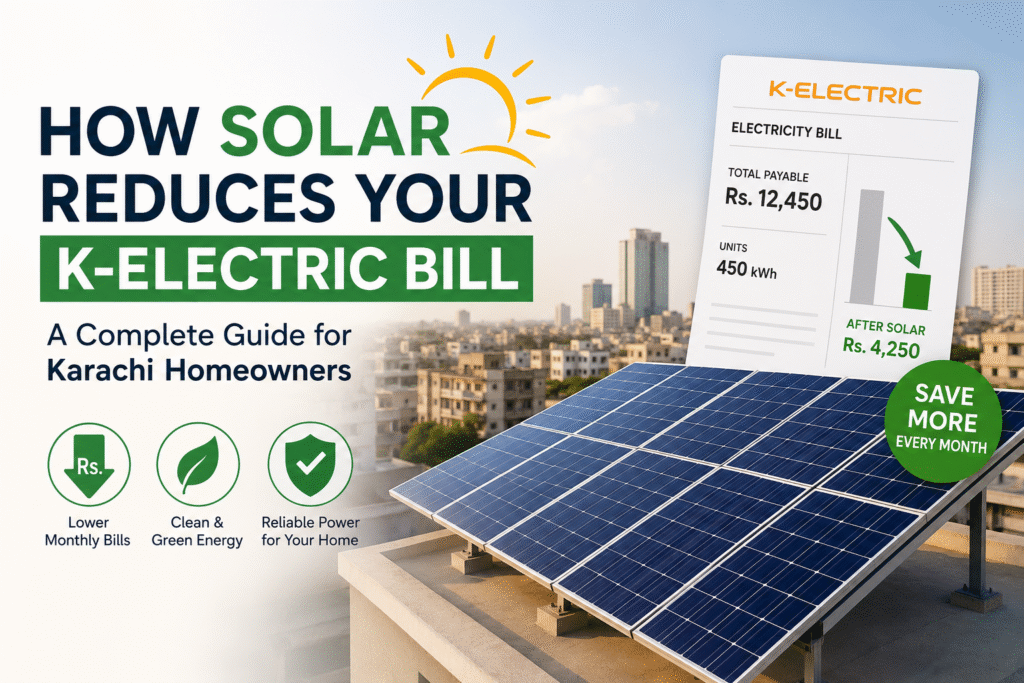
For many families in Karachi, the monthly K Electric bill has become a real source of stress. Electricity tariffs have climbed sharply over the past few years, and running everyday appliances air conditioners, refrigerators, washing machines, water pumps, kitchen equipment adds up fast, whether you live in a small apartment or a large villa. On top of rising prices, Karachi residents deal with load shedding, voltage fluctuations, and heavy peak hour usage, all of which hit harder in summer when air conditioners and cooling appliances run for longer hours.
Solar energy has become one of the most effective ways to deal with all of this at once. With abundant sunshine nearly year round, Karachi is one of the best cities in Pakistan for residential solar and a properly sized system can meaningfully cut what you pay K Electric every month. This guide covers why K Electric bills keep rising, how solar actually reduces them, how to size a system for your home, and what to know before making the switch.
Why K Electric Bills Keep Rising
A few factors combine to push monthly bills up, even when a household’s actual usage hasn’t changed much:
- Rising tariffs : every unit of electricity costs more than it used to, so even moderate usage now costs more.
- Heavy summer consumption : air conditioners, fans, refrigerators, and freezers run longer and harder in Karachi’s long, hot summers.
- Peak hour usage : most households concentrate their electricity use in the evening, when lights, ACs, TVs, and kitchen appliances all run at once.
- More appliances per household : smart TVs, routers, security systems, and other small devices add up even though each one uses relatively little on its own.
Your K Electric bill reflects the units you consume (kWh), plus taxes, duties, and fuel adjustment charges so the more electricity you draw from the grid, the higher the bill. This is exactly where solar makes a difference.
How Solar Actually Reduces Your Bill
Solar panels generate electricity directly from sunlight, so instead of buying all your power from K Electric, your home draws first from what your own system produces. Fewer units imported from the grid means a smaller monthly bill and the more solar energy your home produces and uses, the greater the savings.
How a residential system works
Panels capture sunlight
Photovoltaic (PV) cells on your rooftop convert sunlight into DC electricity.
The inverter converts it
Since household appliances run on AC power, the inverter converts the DC electricity your panels generate into usable AC power.
Your home uses solar power first
During daylight hours, appliances like fans, lights, refrigerators, ACs, washing machines, and water pumps draw from your solar system before pulling from the grid.
Grid consumption drops
Whenever your panels generate enough electricity to cover your usage, your dependence on K Electric and your bill goes down accordingly.
Why Karachi Is One of the Best Cities for Solar
Karachi’s climate makes it particularly well suited to residential solar:
- Abundant sunshine and long daylight hours for consistent electricity generation
- High daytime electricity demand, especially from air conditioners and cooling appliances, which lines up well with solar production hours
- Rising tariffs, which make the savings from generating your own power more valuable every year
Homes with unobstructed rooftop exposure tend to produce the most electricity, since shade from nearby buildings or trees can meaningfully cut output.
Choosing the Right Solar System Size
Every home has different electricity needs, so system size should match your household’s actual usage.
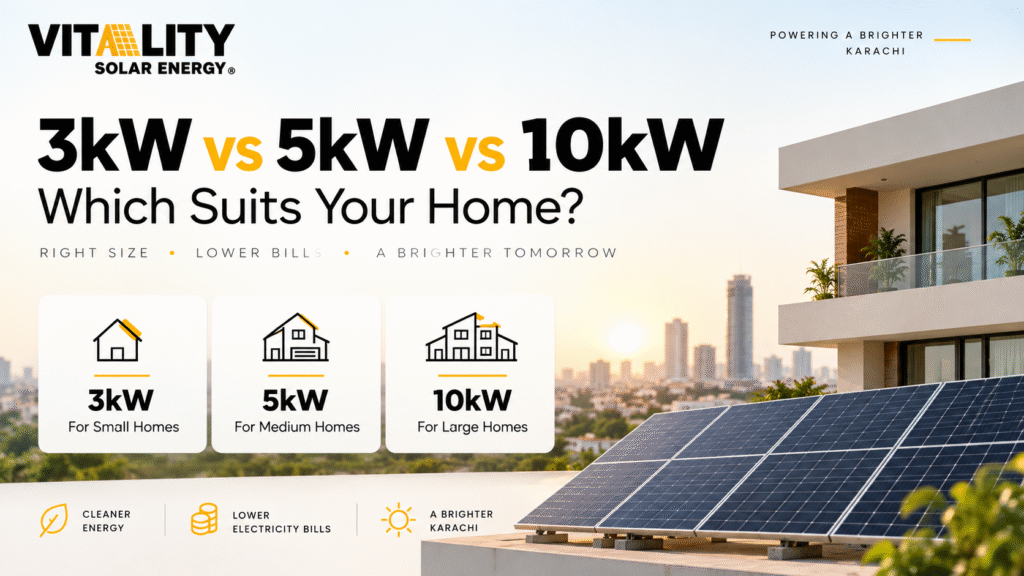
System Size | Suitable For | Typical Usage |
3kW | Small homes, apartments, 2 to 4 people | Lights, fans, refrigerator, TV, router, laptop, small kitchen appliances |
5kW | Medium homes, 4 to 6 people | The above, plus washing machine, water pump, desktop computer, and one inverter AC |
7kW | Large homes, higher usage | Multiple ACs, freezer, washing machine, home office equipment, security systems |
10kW | Large villas, high electricity users | Multiple inverter ACs, deep freezers, dishwashers, full home office and entertainment systems |
A professional energy assessment ideally based on 6 to 12 months of your actual K Electric bills is the most reliable way to size a system correctly. Undersizing means you won’t cover your usage; oversizing means paying more upfront than you need to.
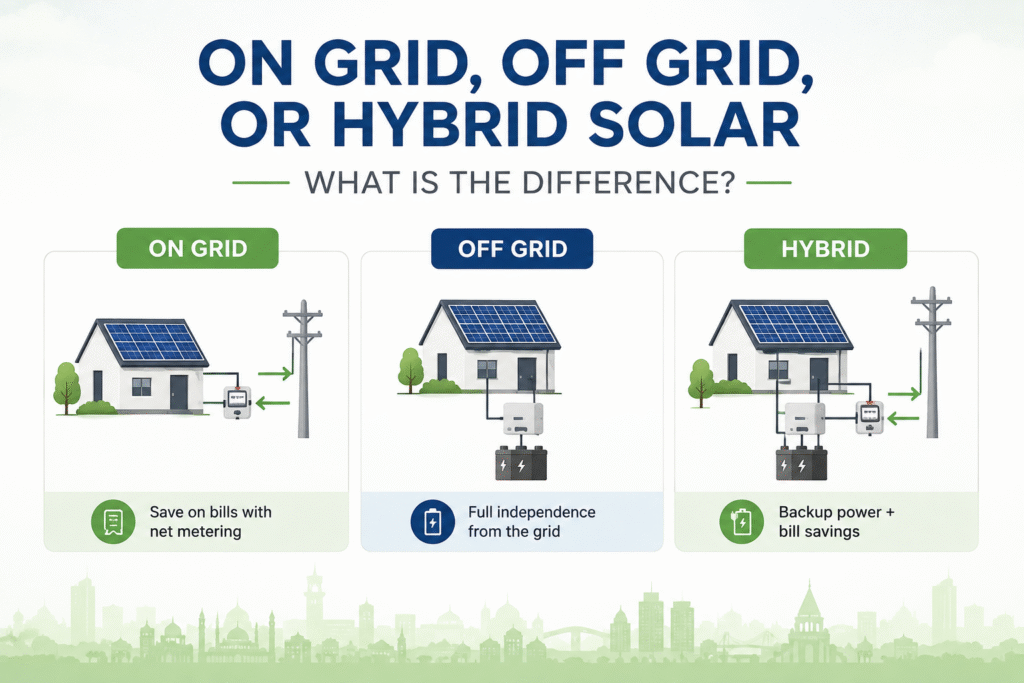
On Grid vs. Hybrid Solar Systems
The other major decision is whether you want backup power during load shedding, or just lower bills.
Feature | On Grid Solar | Hybrid Solar |
Uses solar power | Yes | Yes |
Connected to grid | Yes | Yes |
Battery backup | No | Yes |
Works during load shedding | Usually not | Yes |
Lowers electricity bills | Yes | Yes |
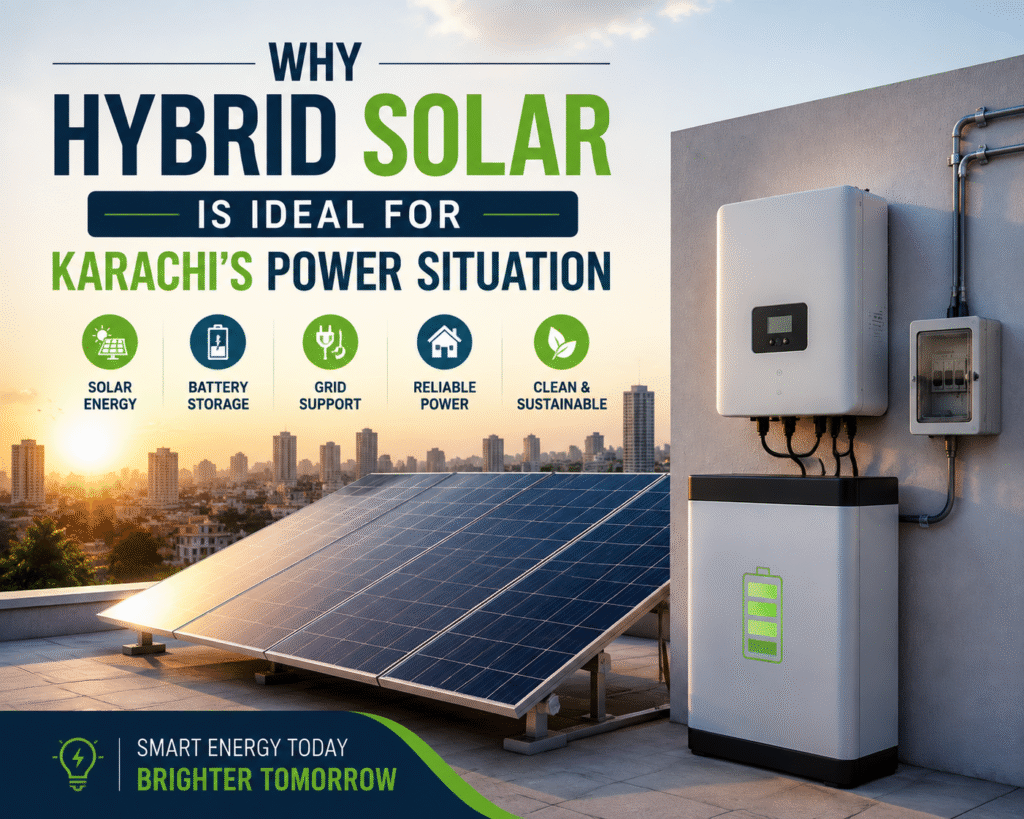
If your main goal is cutting your bill, an on grid system is often sufficient. If you also want power to keep running during outages, a hybrid system with battery storage is the better fit.
What is net metering?
Net metering lets you export excess solar electricity back to the grid during sunny hours when your panels produce more than your home is using. Later at night, for instance you draw from the grid again as needed. It improves your return on investment by making sure surplus solar production isn’t wasted, which makes solar an even stronger investment for many Karachi households.
Solar vs. Generators vs. UPS
Feature | Solar | Generator | UPS |
Generates electricity | Yes | Yes | No |
Fuel required | No | Yes | No |
Noise | Silent | Loud | Silent |
Air pollution | None | High | None |
Running cost | Very low | High | Low |
Lowers electricity bills | Yes | No | No |
Generators and UPS units provide backup power, but neither reduces what you pay K Electric and generators come with ongoing fuel and maintenance costs. Solar is the only option on this list that lowers your bill while also being cleaner and quieter to run.
What Affects How Much You’ll Save
Savings vary by household, but a few factors matter most:
- Daytime electricity consumption : homes that use more power during daylight hours benefit most, since they consume solar output directly instead of relying on the grid.
- Roof orientation and shading : proper panel placement and minimal shade from buildings or trees maximize output.
- Panel and inverter quality : higher quality equipment generally means better efficiency, a longer lifespan, and stronger performance in Karachi’s heat.
- Regular maintenance : Karachi’s dust accumulates on panels quickly, so periodic cleaning is important for keeping output at its peak.
Summer tends to be the season where solar pays off most visibly: longer sunlight hours mean more production right as air conditioner usage and your bill would otherwise be climbing.
Common Myths About Solar
Solar only works on sunny days
Panels still generate useful electricity on cloudy days output just decreases, it doesn’t stop.
Solar eliminates your entire bill
How much your bill drops depends on system size, usage, and weather. A well designed system can cut costs substantially, but eliminating the bill entirely isn’t guaranteed for every household.
Solar needs constant maintenance
In practice, routine cleaning and occasional inspections are enough to keep a system running efficiently.
Solar is only for large houses
Systems come in a range of sizes small apartments and large villas alike can be fitted with a system suited to their usage.
Installing solar damages your roof
Professional installation uses mounting structures designed to protect the roof while securely supporting the panels.
Mistakes to Avoid
- Choosing the cheapest equipment : lower upfront cost often means worse efficiency, durability, and warranty coverage.
- Ignoring future energy needs : if you’re planning to add an AC, an EV charger, or a home office down the line, size your system with that in mind now.
- Getting the system size wrong : a professional assessment based on your actual usage avoids both under and over sizing.
- Working with inexperienced installers : installation quality affects generation, safety, and how long your system lasts.
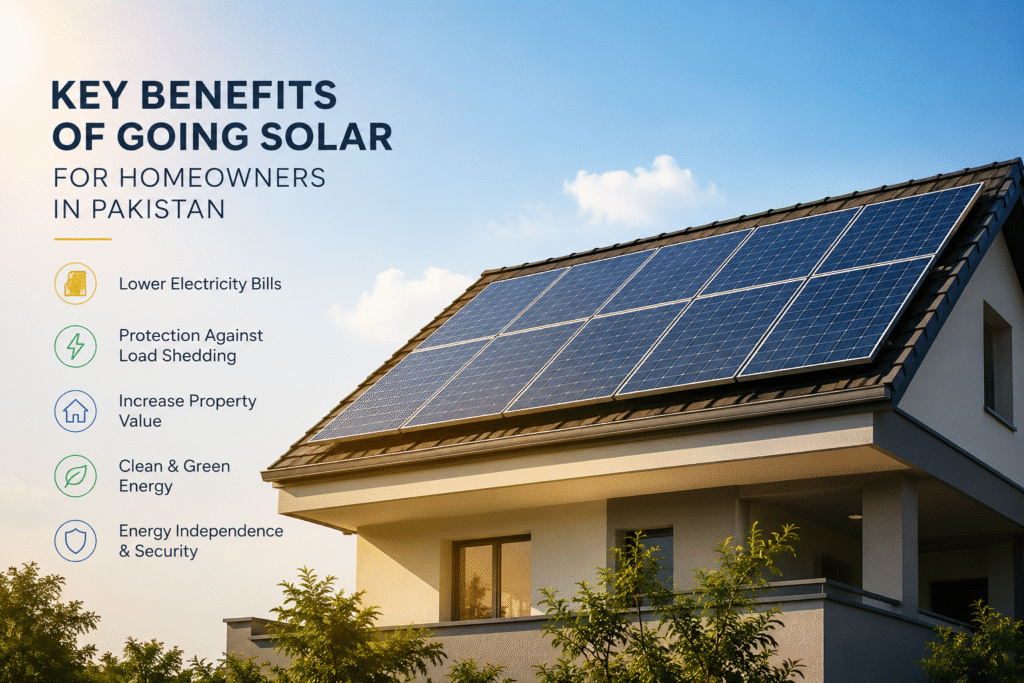
Beyond Lower Bills: Other Benefits
- Energy independence from rising tariffs and grid reliability issues
- Cleaner air, since solar generates electricity without burning fossil fuels
- Higher property value, as homes with professionally installed solar are often seen as more energy efficient
- Less reliance on generators, particularly with hybrid systems during load shedding
- A long lifespan quality panels are built to perform efficiently for 25 to 30 years
How Vitality Solar Energy Helps Karachi Homeowners
At Vitality Solar Energy, we start by understanding your household’s electricity consumption, roof space, and future energy needs before recommending a system. Whether you want an on grid system to lower your K Electric bill or a hybrid system with battery backup for uninterrupted power during load shedding, our team handles consultation, system design, installation, and after sales support using high quality panels and inverters.
Frequently Asked Questions
Is Karachi suitable for solar panels?
Yes abundant sunshine makes it one of the best cities in Pakistan for residential solar.
Can solar completely replace K Electric?
Solar can significantly reduce your dependence on the grid, but whether it replaces it entirely depends on your system size, usage, and whether you have battery storage.
Do solar panels work during load shedding?
Only hybrid systems with battery storage keep running during outages. Standard on grid systems typically shut off along with the grid unless backup equipment is added.
How long do solar panels last?
Most quality residential panels are built to perform efficiently for 25 to 30 years with proper maintenance.
How often should panels be cleaned?
It depends on local dust and weather conditions, but in Karachi, periodic cleaning is important to maintain peak output.
Can I use air conditioners with solar?
Yes a properly sized system can power inverter ACs along with your other household appliances.
How long does it take to recover the cost of a system?
The payback period depends on system size, usage, and future tariff changes, but many homeowners recover their investment within several years through ongoing bill savings.
Can I expand my system later?
In most cases, yes additional panels, batteries, or inverters can be added as your household’s energy needs grow.
Choosing a Smarter Energy Future
Solar has become one of the most practical ways for Karachi homeowners to deal with rising K Electric bills and unreliable grid power. With sunshine available nearly year round, a properly sized residential system offers a real path to lower monthly costs, greater energy independence, and long term savings protecting you against tariff increases for decades to come.
By choosing the right system size, investing in quality equipment, and working with an experienced installer, you can enjoy dependable power and real relief from your electricity bill for years to come.