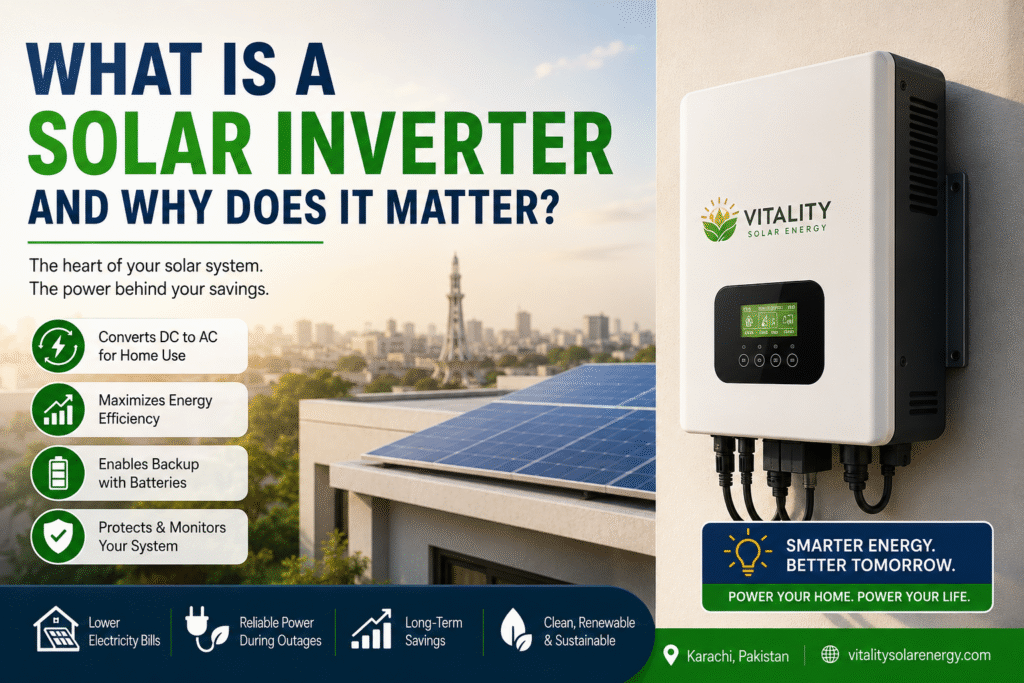
As more homeowners in Karachi switch to solar energy, many people focus entirely on solar panels and overlook another essential component: the solar inverter. Panels generate electricity from sunlight, but they can’t power your home on their own. The electricity they produce has to be converted into a form your appliances can actually use and that’s the inverter’s job. The inverter you choose affects your system’s efficiency, its ability to provide battery backup during load shedding, and how much you ultimately save over the system’s lifetime. In a city where electricity tariffs keep climbing and outages remain common in many neighborhoods, getting the inverter right matters just as much as getting the panels right. This guide covers what a solar inverter does, how it works, the different types available, how to size one correctly, and how to avoid the most common buying mistakes.
What Is a Solar Inverter and How Does It Work?
A solar inverter converts the direct current (DC) electricity generated by solar panels into alternating current (AC) the type of power used by household appliances like air conditioners, refrigerators, washing machines, water pumps, and Wi Fi routers. Without it, none of your appliances could run on solar generated electricity at all.
The process works in a simple sequence:
- Solar panels generate DC electricity as they absorb sunlight throughout the day.
- That DC electricity flows to the inverter.
- The inverter converts it to AC, making it usable by your home’s wiring and appliances.
- Your home draws on that power directly during daylight hours.
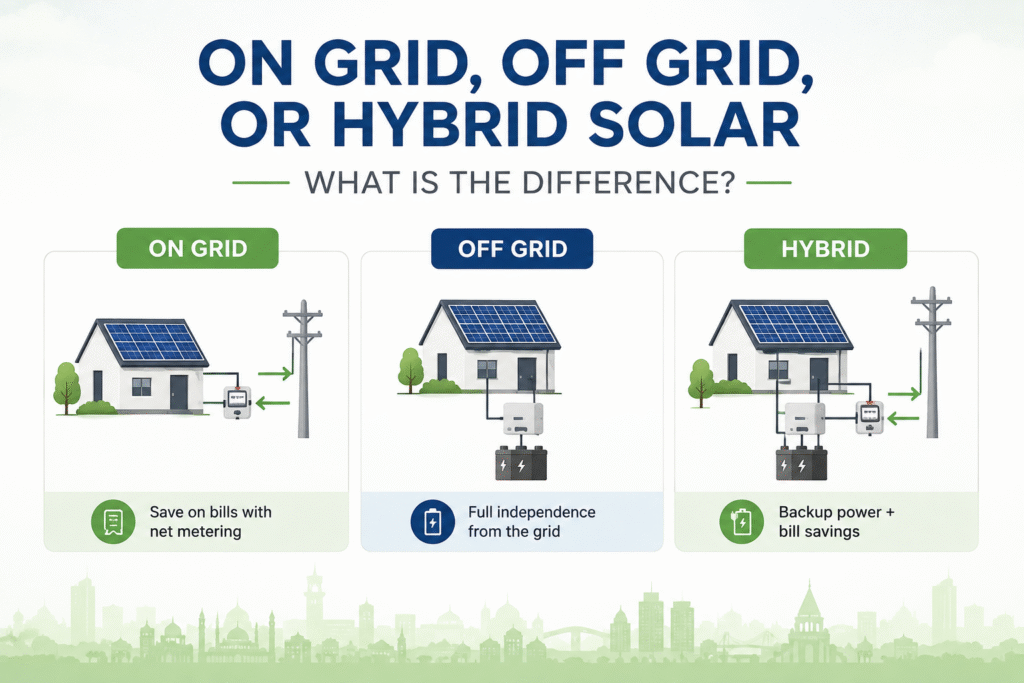
- Any surplus is managed automatically exported to the grid through net metering, or stored in batteries if you have a hybrid system.
Beyond conversion, a good inverter also monitors system performance, manages battery charging, and provides safety protections against faults and voltage irregularities meaning even premium solar panels can’t perform to their potential if the inverter behind them is weak.
Why Inverter Choice Matters for Karachi Specifically
A few local realities make inverter selection especially important here:
Rising tariffs
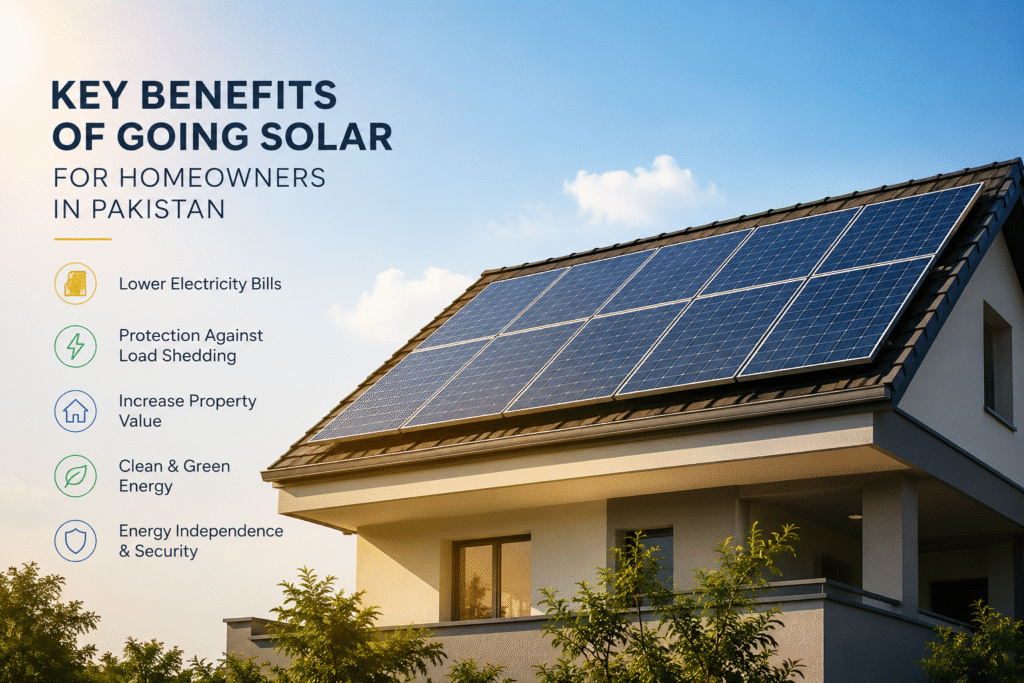
As K Electric rates climb, a more efficient inverter translates directly into more usable electricity and greater bill savings from the same panels.
Load shedding
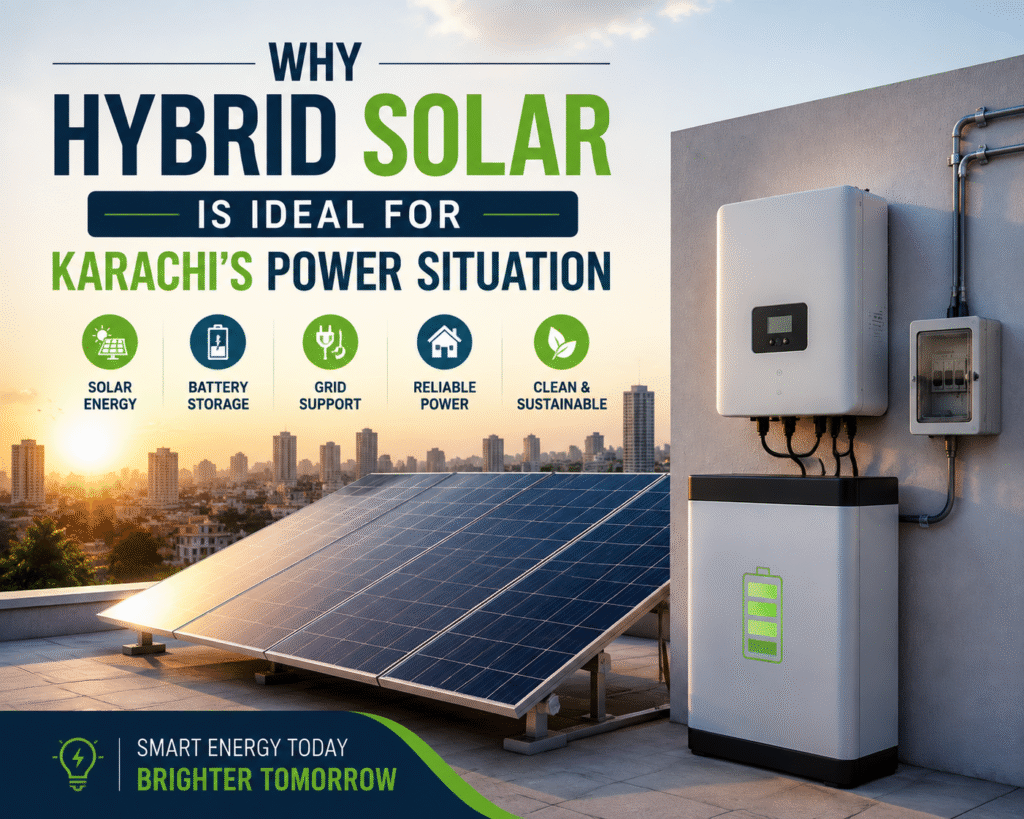
Many neighborhoods still experience periodic outages that disrupt work from home setups, online learning, and security systems. A hybrid inverter paired with battery storage is the standard fix, since it can keep supplying power when the grid goes down.
Extreme summer heat
Inverters generate heat as they operate, and Karachi’s summers push that further. Units designed for high temperature environments, installed in a shaded, well ventilated spot, hold their efficiency far better than cheaper alternatives.
Voltage fluctuations
Grid instability can shorten appliance lifespan. Modern inverters include built in protections that help manage these swings safely.
These same pressures high bills, unreliable supply, generator dependence with its fuel costs, noise, and pollution are exactly why residential solar has grown so quickly in the city.
Main Components of a Residential Solar System
A complete system includes:
- Solar panels : generate electricity from sunlight
- Solar inverter : converts it into usable AC power
- Mounting structure : secures panels on the roof
- Battery : This is for hybrid systems only it stores excess electricity for night use or outages
- Monitoring system : tracks generation and performance via app
- Electrical protection equipment : breakers, isolators, surge protection, and wiring for safe operation
Types of Solar Inverters
Five inverter types are commonly used in Pakistan, each suited to different property types and needs.
1. String Inverters
The most common residential choice. Multiple panels are wired together into a “string” feeding one inverter.
- Pros: cost effective, reliable, simple to install and maintain, efficient on unshaded roofs
- Cons: performance drops if any one panel is shaded; less flexible for roofs with multiple orientations
- Best for: most homes with minimal roof shading
2. Microinverters
Installed under each individual panel, so one panel’s shading or fault doesn’t drag down the rest.
- Pros: independent panel performance, better output under partial shade, per panel monitoring, easier future expansion
- Cons: higher upfront cost, more equipment, repairs may require rooftop access
- Best for: homes with complex roof angles or partial shading from trees or nearby buildings
3. Hybrid Inverters
Combine solar generation, battery storage, and grid connectivity, switching intelligently between sources.
- Pros: battery ready, provides backup during load shedding, works with net metering, reduces grid dependence
- Cons: higher initial investment, more complex installation
- Best for: homes with frequent outages or anyone planning long term energy independence generally the top pick for Karachi households that want backup power
4. Off Grid Inverters
Built for properties with no utility connection at all, relying entirely on solar and battery storage.
- Pros: full energy independence, ideal for remote locations
- Cons: requires larger battery banks, higher cost, careful energy management
- Best for: farmhouses and rural properties rarely needed in urban Karachi, where grid access is available
5. Central Inverters
Large scale equivalents of string inverters, used for solar farms and industrial installations.
- Pros: handles high capacity, lower cost per watt at scale
- Cons: impractical for homes, needs significant installation space
- Best for: commercial and utility scale projects only
Sizing Your Inverter Correctly
Inverter capacity should match your household’s electricity consumption and panel capacity an oversized or undersized inverter won’t perform efficiently even if it’s high quality.
Size | Best For | Typical Appliances Supported |
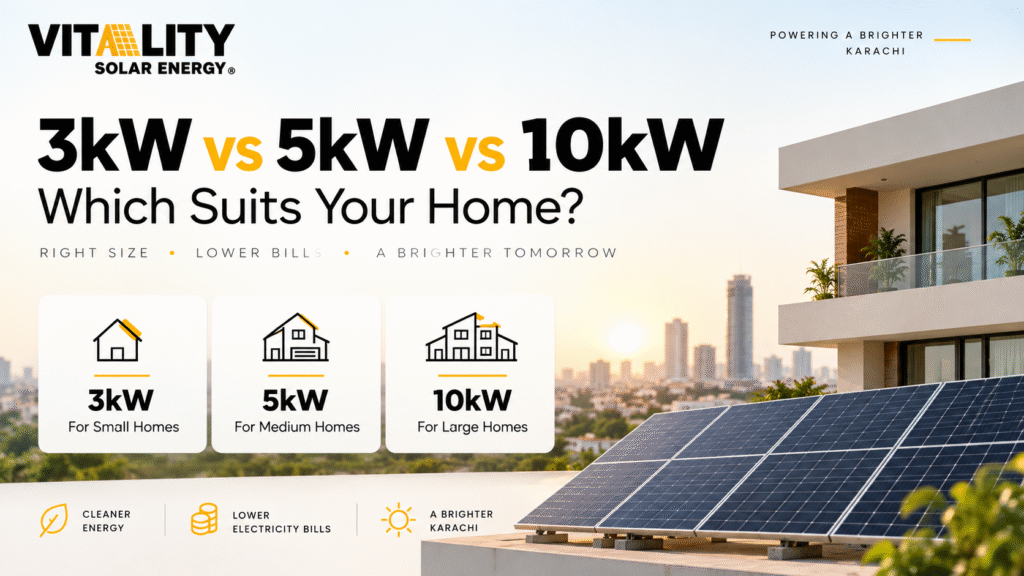
3kW | Small homes and apartments for 2 to 4 people | Lights, fans, fridge, TV, router, laptop, small kitchen appliances |
5kW | Medium homes for 4 to 6 people | The above, plus washing machine, water pump, and one inverter AC the most popular size in Karachi |
7kW | Large homes with high demand | Multiple inverter ACs, deep freezer, home office equipment, security systems |
10kW | Large villas/luxury homes | Multiple ACs, dishwashers, full household lighting, entertainment systems |
A professional site assessment is the most reliable way to determine the right size guessing based on panel count alone often leads to an inverter that’s mismatched to actual usage.
Choosing the Right Inverter: What to Check
Before buying, evaluate:
- Conversion efficiency : directly affects how much usable electricity you get
- Battery compatibility : even if you don’t need batteries now, future proofing matters
- Net metering support : needed if you plan to export surplus electricity
- Smart monitoring : mobile app access to generation data, alerts, and diagnostics
- Build quality and cooling : critical given Karachi’s summer heat
- Warranty and manufacturer reputation : compare product warranty, technical support, and service availability, not just sticker price
Mistakes to Avoid
Buying on price alone
The cheapest inverter often means lower efficiency, a shorter lifespan, and weaker warranty coverage.
Ignoring future expansion
Many households later add AC units, EV chargers, or extra panels an inverter with no headroom makes that harder and costlier.
Skipping a professional assessment
Every household’s electricity profile is different; a proper site visit prevents mismatched sizing.
Assuming bigger is always better
An oversized inverter that doesn’t match your panel capacity or household demand won’t necessarily run more efficiently.
Professional installation matters just as much as the inverter itself correct sizing, safe wiring, proper ventilation, and compliance with electrical safety standards all depend on it.
Maintenance and Common Problems
Modern inverters need relatively little upkeep, but a few issues do come up:
Low energy production
Often caused by dirty panels, shading, poor weather, or incorrect sizing. Regular cleaning and inspection usually resolve this.
Error messages
Typically flag communication issues, grid voltage fluctuations, overheating, or wiring faults; most inverters display these on screen or via the monitoring app.
Overheating
A real risk in Karachi’s summers. Installing the unit in a shaded, well ventilated spot is the main preventive step.
Battery charging issues
Hybrid systems usually linked to battery age, wiring, or incorrect settings.
Basic upkeep is simple: keep the unit clean and free of debris, don’t block ventilation openings, check the monitoring app periodically for alerts, and schedule a professional inspection every so often to confirm connections remain secure.
Signs it may be time to replace your inverter
frequent error messages, unexplained drops in output, unexpected shutdowns, trouble connecting to the monitoring app, unusual noise or heat, visible physical damage, or simply reaching the end of its expected service life. Any of these warrant a professional inspection before the problem worsens.
Common Myths, Corrected
- All inverters perform the same. They don’t efficiency, battery compatibility, monitoring, and backup capability vary significantly between models.
- Panels matter more than the inverter. Both are equally important; even premium panels underperform behind a weak inverter.
- Bigger is always better. An inverter that doesn’t match your panel capacity and household load won’t run efficiently just because it’s larger.
- Inverters need constant maintenance. Most modern units need little beyond occasional inspection and proper ventilation.
- Inverters only convert electricity. Smart inverters today also monitor performance, manage battery charging, and provide safety protections and mobile alerts.
Frequently Asked Questions
How long does a solar inverter last?
Most quality residential inverters are built for many years of reliable use, though actual lifespan depends on the brand, installation quality, and environmental conditions.
Can I replace or upgrade my inverter without replacing my panels?
Yes, in most cases as long as the new inverter is compatible with your existing system.
Do inverters work in cloudy weather?
Yes. Output may be lower since the panels themselves generate less electricity, but the inverter continues converting whatever power is produced.
Can one inverter power my whole house?
If it’s properly sized for your household’s demand, it can supply most or, in some cases, nearly all of your electricity needs.
Does every solar system need an inverter?
Yes panels produce DC electricity, and virtually all household appliances run on AC, so conversion is unavoidable.
Which inverter is best for a Karachi home?
It depends on your consumption, system size, and whether you need backup power. String inverters suit straightforward on grid setups; hybrid inverters are the better choice if you also want protection against load shedding.
Choosing the Right Solar Inverter for Long Term Performance
A solar inverter is the control center of your entire solar power system not just a conversion box. It determines how efficiently your panels’ output reaches your appliances, how well your system handles Karachi’s heat and voltage fluctuations, and whether you have power during an outage. Understanding the inverter types, sizing your system correctly, and investing in a quality unit installed by experienced professionals will do more for your long term savings and reliability than upgrading panels alone. Whether this is your first solar installation or you’re expanding an existing one, the inverter is worth as much attention as the panels themselves. At Vitality Solar Energy, we help Karachi homeowners choose and install the right inverter for their electricity usage, roof layout, and backup needs from straightforward on grid systems to full hybrid setups with battery storage.